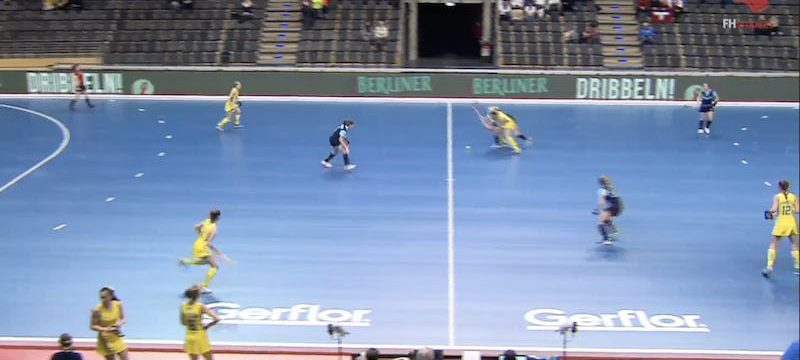
The offensive player is obstructed initially when the defender comes over the top of her stick in an attempted tackle. However, she uses her stick to move the defender’s stick away in a dangerous …

NZLvARG Hand on back no call
Does the hand in the back on this tackle make a difference? Pay attention to the defender’s stick, the contact made with the ball and the feet of the ball carrier. How would you put these factors …

AUSvNED GC for breakdown tackle trip
A green card is awarded after a late stick trips up the ball carrier. To ensure you get this call right too, make sure you’re creating an angle off the sideline that keeps you from getting “caught in …
Continue Reading about AUSvNED GC for breakdown tackle trip →
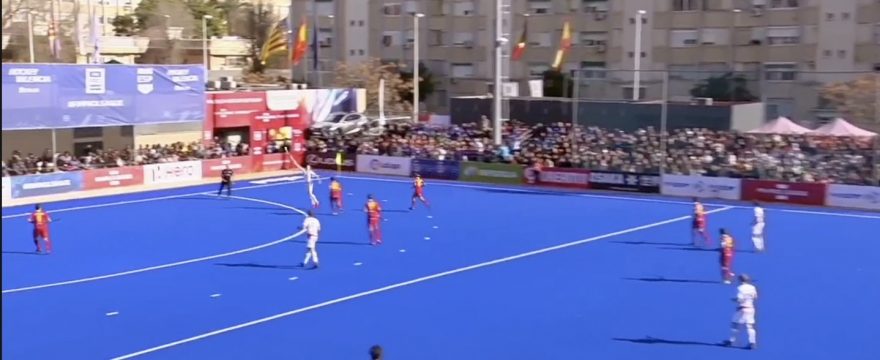
ESPvBEL Far side positioning adjustments
Martin Madden’s movement here is a great example of how there isn’t necessarily one “correct” place to be vis-a-vis the play. When the ball gets bogged down in a crowded area, he moves quickly to a …
Continue Reading about ESPvBEL Far side positioning adjustments →
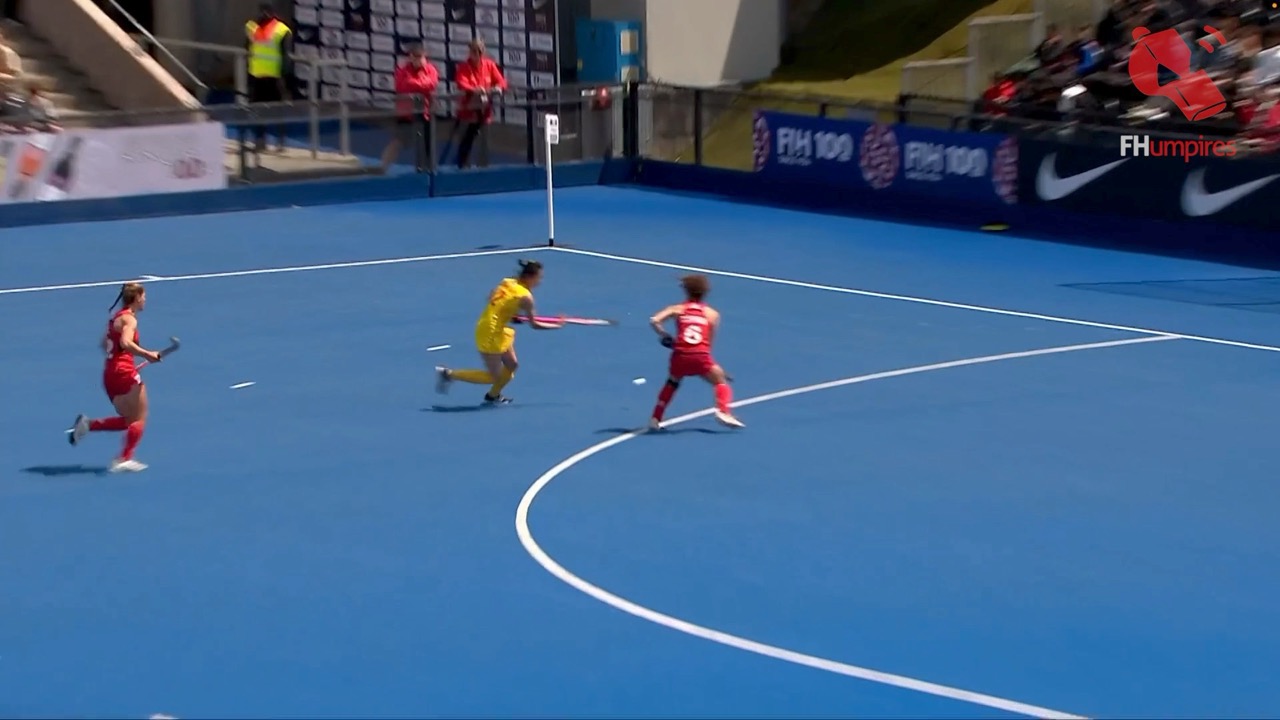
CHNvGBR VR aerial 5m infringement
Description to follow …
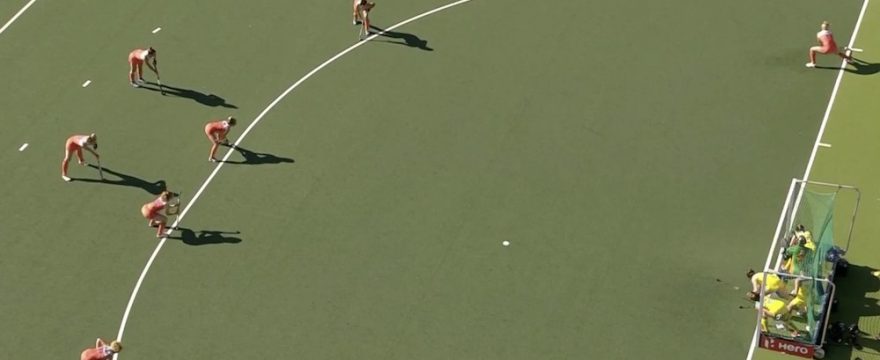
NEDvAUS Early break on PC
A defender breaks early and although she does stop her forward momentum into the circle, the umpire calls for the restart immediately in order to keep things safe for everyone. When the regular pace …
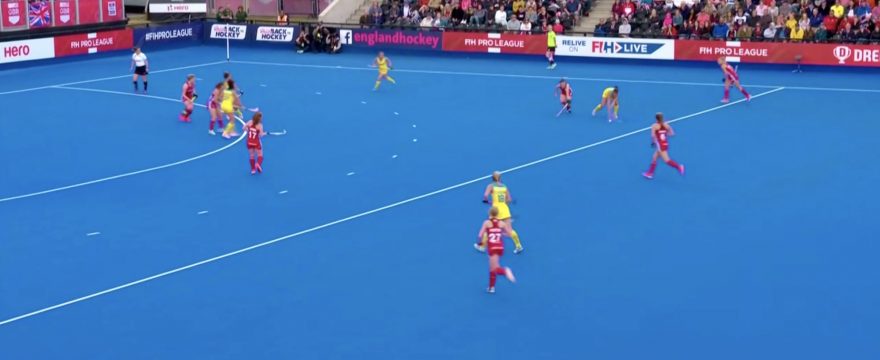
GBRvAUS Back stick in midfield
A midfield pass is played off the back stick and called only for danger when the receiver tries to deflect it on dangerously into her marking defender. Watch for the speed of the swing and the lack of …

AUSvGBR GC taking a shot after the whistle
The attacker attempts to bring down an overhead but it has exited the pitch. He continues the play and unleashes a hard cross towards goal after the whistle has blown. For the reckless play, the green …
Continue Reading about AUSvGBR GC taking a shot after the whistle →
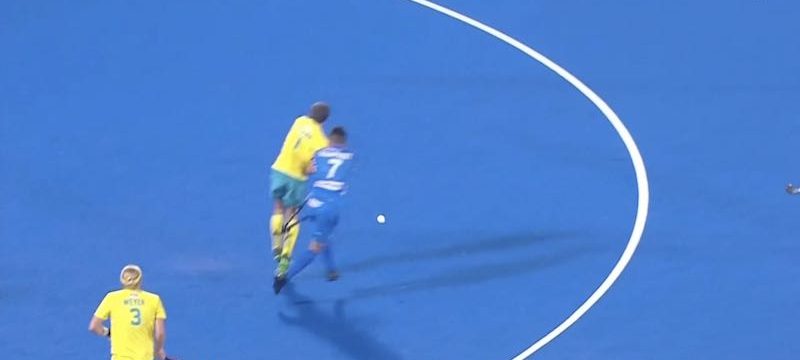
INDvAUS 2 GCs breakdown and danger
The first two green cards of the game come in quick succession after first, a chasing defender pushes the ball carrier from behind just outside the 23m. The perfectly-timed and well-weighted nudge is …
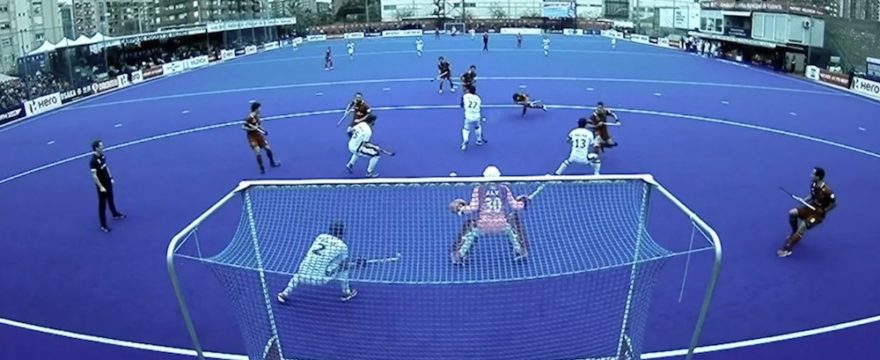
ESPvGER Height of drag flick on PC
When a raised shot at goal strikes a defender who is 5m or fewer from the ball, the rule requires us to examine the height. Had this shot struck the runner below the knee, it is not considered …
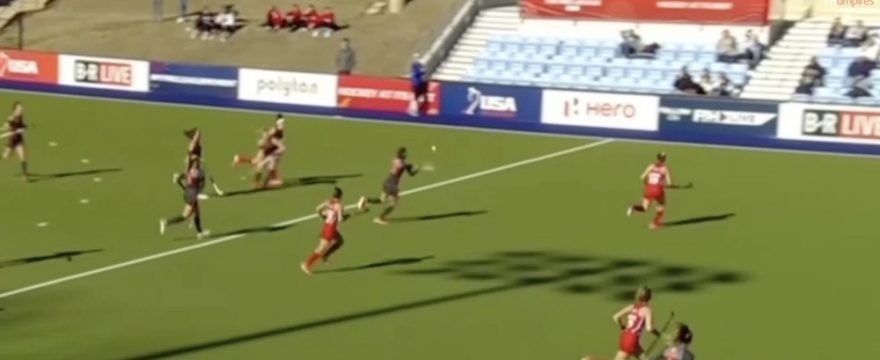
USAvNED Ball likely to lead to danger
A defender attempts to intercept a pass, deflecting the ball back towards a teammate who further tries to cut out the pass. That attempt deflects the ball high into the air where it’s falling into an …
Continue Reading about USAvNED Ball likely to lead to danger →
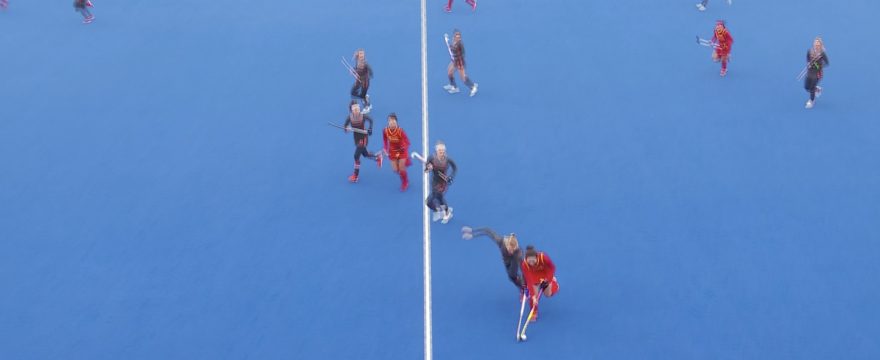
CHNvNED Stick shield
The ball carrier receives the ball on the turn and moves to her left. Her dribble continues in that direction while she places her stick in between the ball at the tackler’s stick in a non-momentary …

ESPvGER Green card intentional use of foot
A green card is given for this intentional use of the foot after the defender moves his back foot towards the ball after being beaten on the dribble. Watch for the player moving their foot into the …
Continue Reading about ESPvGER Green card intentional use of foot →
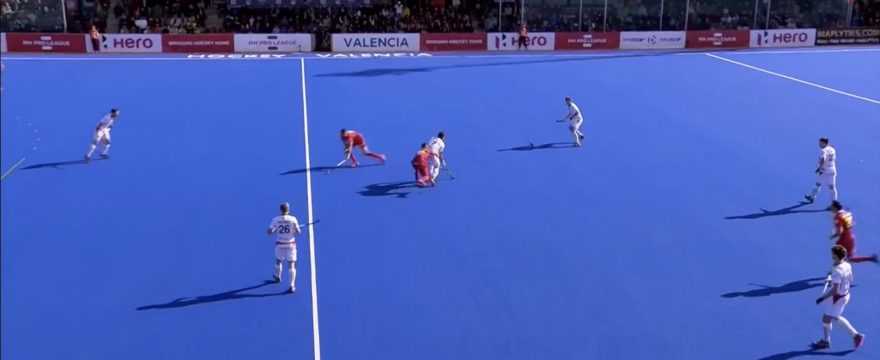
ESPvBEL Warning for arm on back breakdown
After a vigorous challenge comes in from ESP #14, you can hear the umpires talking over the radio to confirm who it was and how they agreed they would deal with it, which was by a verbal warning. The …
Continue Reading about ESPvBEL Warning for arm on back breakdown →
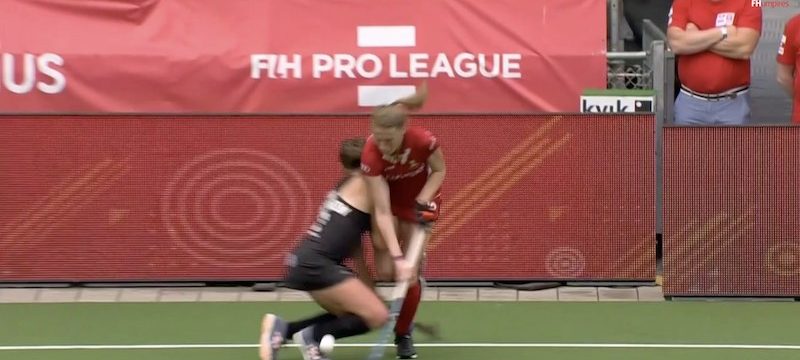
BELvNZL Breakdown worth a card?
Although the defender may not have planned to go to ground in this situation, was she sufficiently reckless with her body and presented enough danger for this stopping body obstruction that a card …
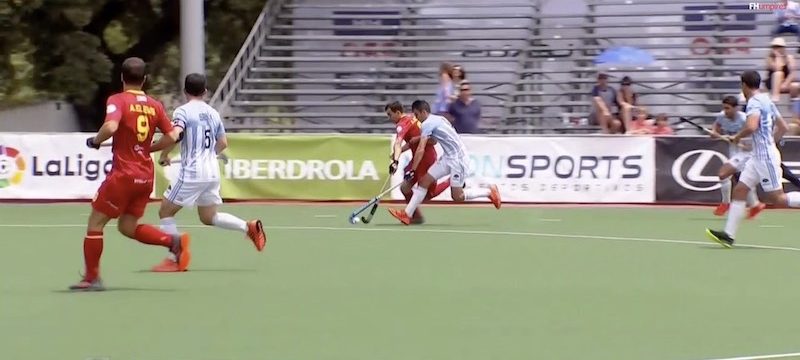
ESPvARG Stick shield on break into the circle
A quick break from inside the other 23m area leaves the umpire chasing the play into his circle. From his position, he adjudges a stick shield by the attacker who is dribbling with one hand on his …
Continue Reading about ESPvARG Stick shield on break into the circle →
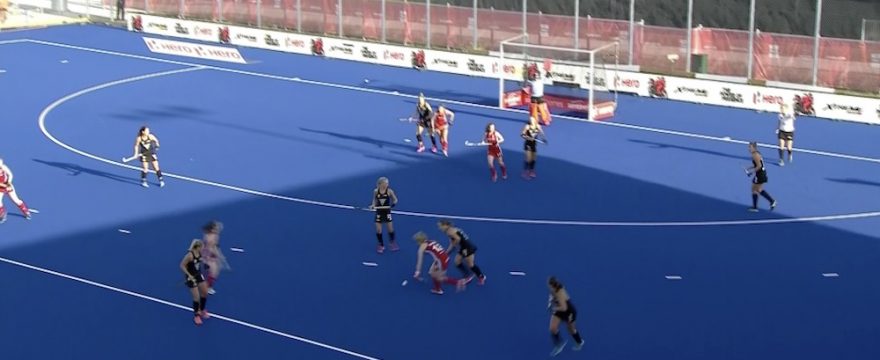
NZLvGBR GC playing ball after whistle
An attacker continues to play after giving up the foul and the whistle is clearly heard, resulting in a green card. To access this content, you must purchase FHU3T Green, FHU3T Green 365, …
Continue Reading about NZLvGBR GC playing ball after whistle →
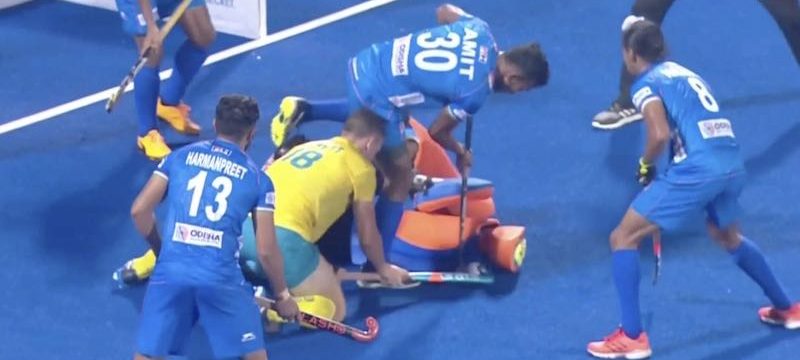
INDvAUS Danger into GK
A melee in front of the goalkeeper goes on for several seconds, where one attacker, two field defenders and the goalkeeper jockey for the ball. Eventually, the attacker gets his stick on the ball but …

INDvNED SO Retake ball trapped in GK
The ball becomes trapped in the goalkeeper’s equipment after making a save in this shootout attempt. As this is an unintentional obstruction, the correct decision is a re-award. To access …
Continue Reading about INDvNED SO Retake ball trapped in GK →

BELvNZL GC for stick obstruction breakdown
A defender is beaten to the ball and as she is beginning to fall off the pace, throws her stick in from behind and breaks down the play. This is a clear green card. To access this content, …
Continue Reading about BELvNZL GC for stick obstruction breakdown →
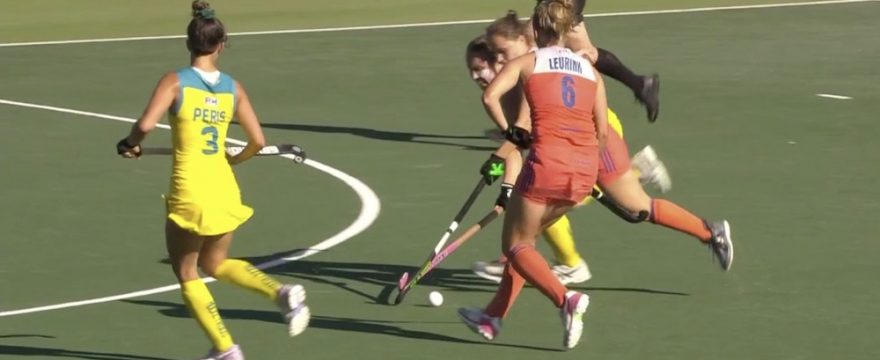
NEDvAUS VR self on goal stick interference by attack
The umpire takes a self-referral on this go-ahead goal, which is a crucial decision to take when the defending team has already lost their right to refer. The question may initially have been whether …
Continue Reading about NEDvAUS VR self on goal stick interference by attack →
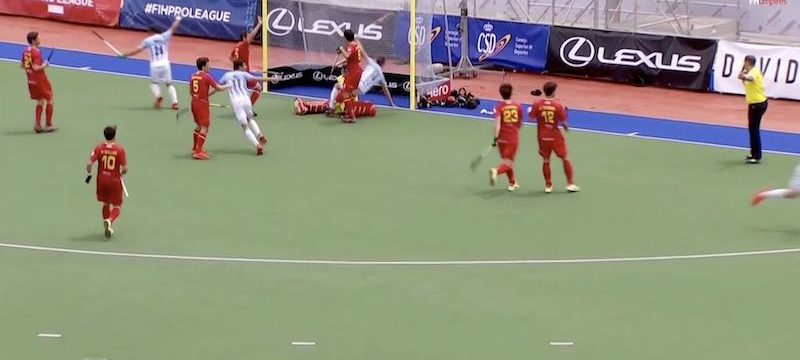
ESPvARG No goal obstruction on the GK
On this nullified goal, an attacker is not only standing in front of the goalkeeper but creating significant contact with him as the shot is being taken on goal, pushing him off balance and …
Continue Reading about ESPvARG No goal obstruction on the GK →
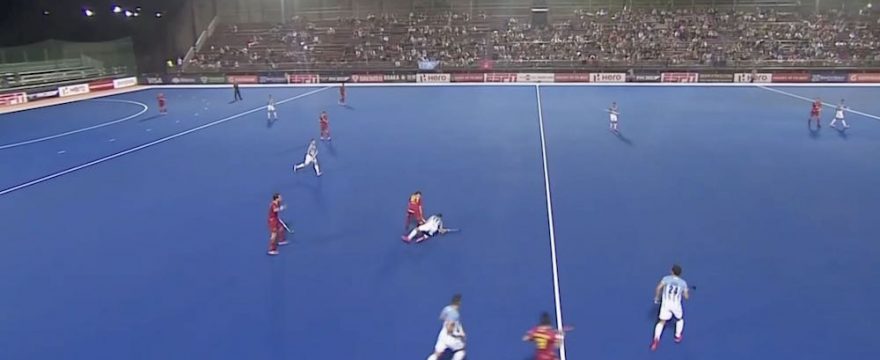
ARGvESP GC breakdown stick tackle
A breakdown tackle is rewarded with a green card just as the tempers start to rise in this game. It’s difficult to see exactly what occurred due to the players’ body positions and the distant camera …
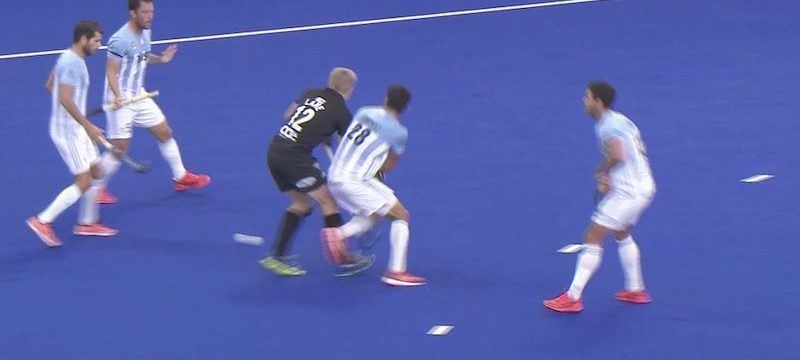
NZLvARG Playing ball after whistle
An early instance where the defending team taps the ball away has the intended effect of allowing the defenders to get back in front of the ball in numbers. Although this particular moment may not …
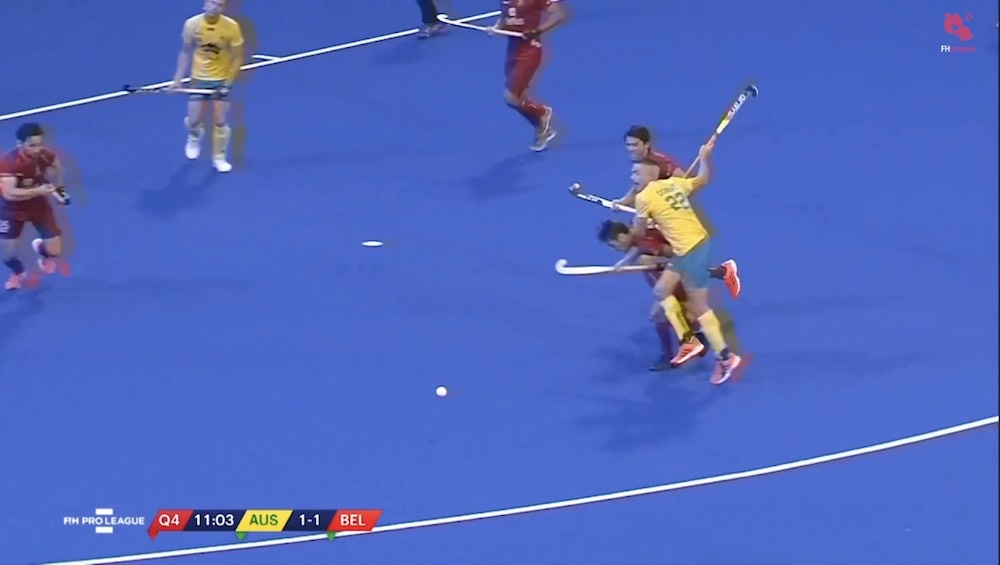
AUSvBEL No call third party obstruction
It’s a fine line picking out whether a ball is within playable distance of an obstructed attacker who is at a full run. Inside the circle, given the close proximity of many players and the goal, a …
Continue Reading about AUSvBEL No call third party obstruction →

GERvAUT Attacker playing ball in the air
Rule 9.10 permits a player to play the ball in the air only when a legitimate shot at goal rebounds from an opposing goalkeeper, defender or post. The player may “stop” the ball, which is interpreted …
Continue Reading about GERvAUT Attacker playing ball in the air →
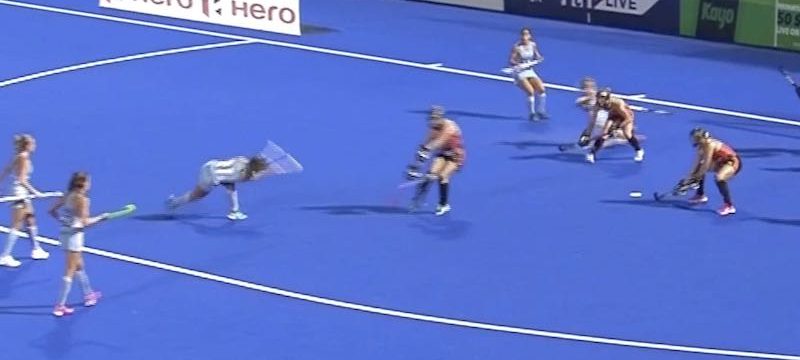
AUSvARG VR drag flick danger
A drag flick that strikes a defender who has closed to within 5m will be judged as dangerous if it hits at knee height or above. It’s crucial that in the absence of video referral, the supporting …
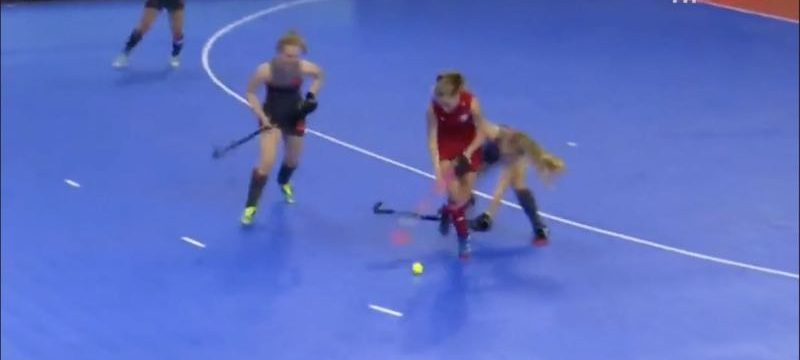
BLRvNED Body obstruction interfering with stick
As the attacker attempts to avoid the tackle from a defender, the defender is able to get her stick on the ball as the attacker’s legs block and interfere with the defender’s stick. A free …
Continue Reading about BLRvNED Body obstruction interfering with stick →
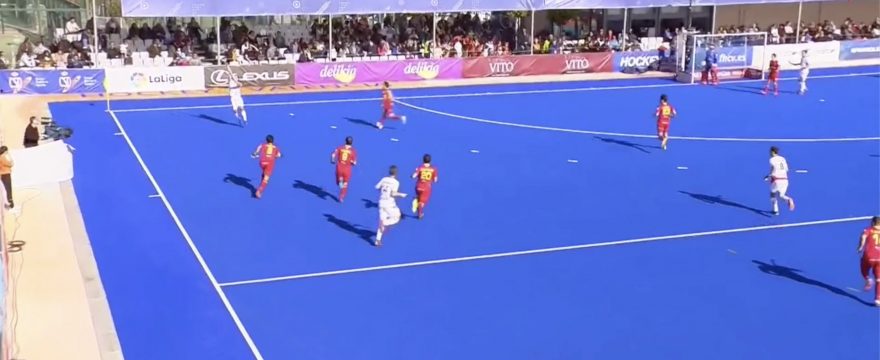
ESPvBEL Aerial to attacker 5m infringement before control
Attacker is occupying the space and is the intended receiver of this aerial. Before the attacker can control the ball to the ground, the defender infringes on the 5m space. As the play …
Continue Reading about ESPvBEL Aerial to attacker 5m infringement before control →
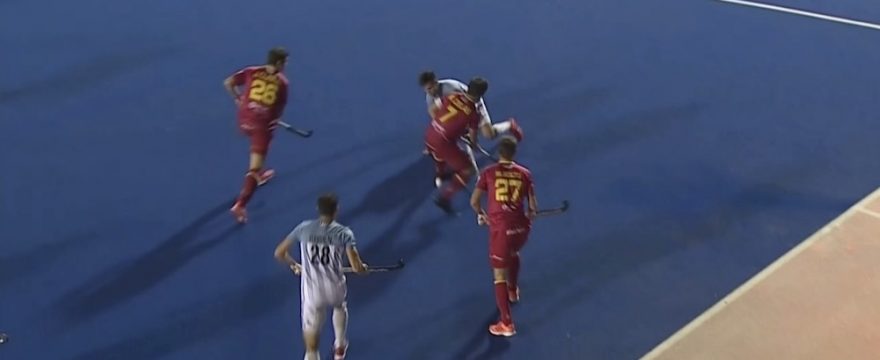
ARGvESP VR for foot after arm
A video referral for a foot is not normally noteworthy, but what is interesting about this is the communication between the pitch umpires and the video umpire. It’s incredibly refreshing for the …
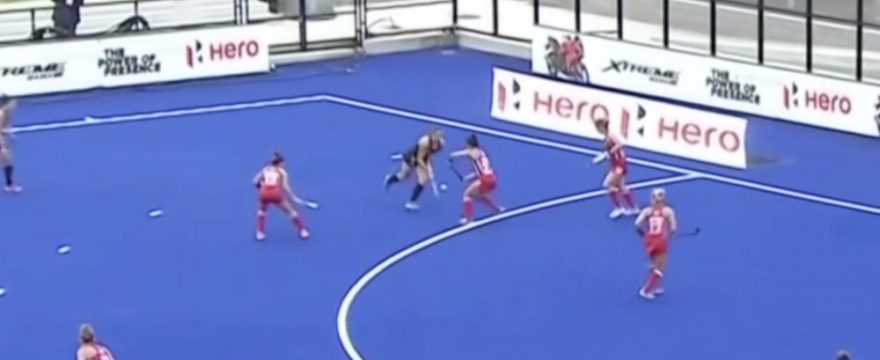
NZLvUSA Dangerous 3D skills
An attacker picks up the ball on a 3D dribble and goes straight at the upright defender, without making any attempt to go around. The umpire correctly calls this as dangerous. Switch your focus to the …
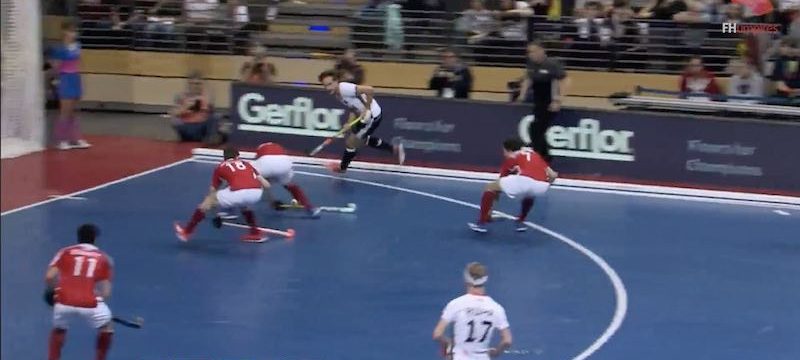
GERvAUT Fine line drilling vs. mishandle
The rule prohibiting dangerous play by way of “drilling” the ball at an opponent is intended to protect players’ hands, feet and faces from injury caused by balls behind played at them at high …
Continue Reading about GERvAUT Fine line drilling vs. mishandle →
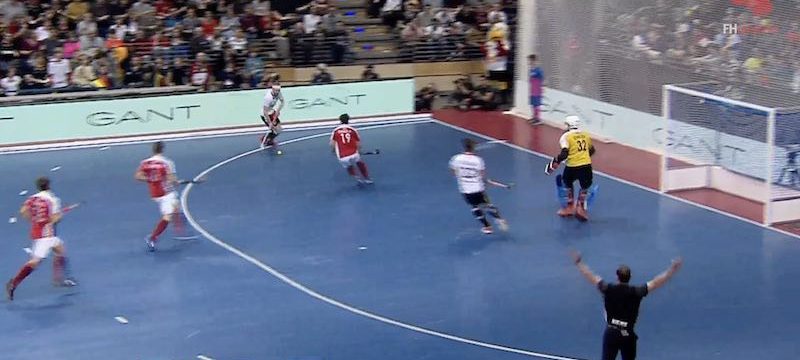
GERvAUT No disadvantage off small raise
It’s natural to look for absolute guidelines as to what should or should not be called as a raised ball. However, the most important factor to consider should always be: was an opponent …
Continue Reading about GERvAUT No disadvantage off small raise →
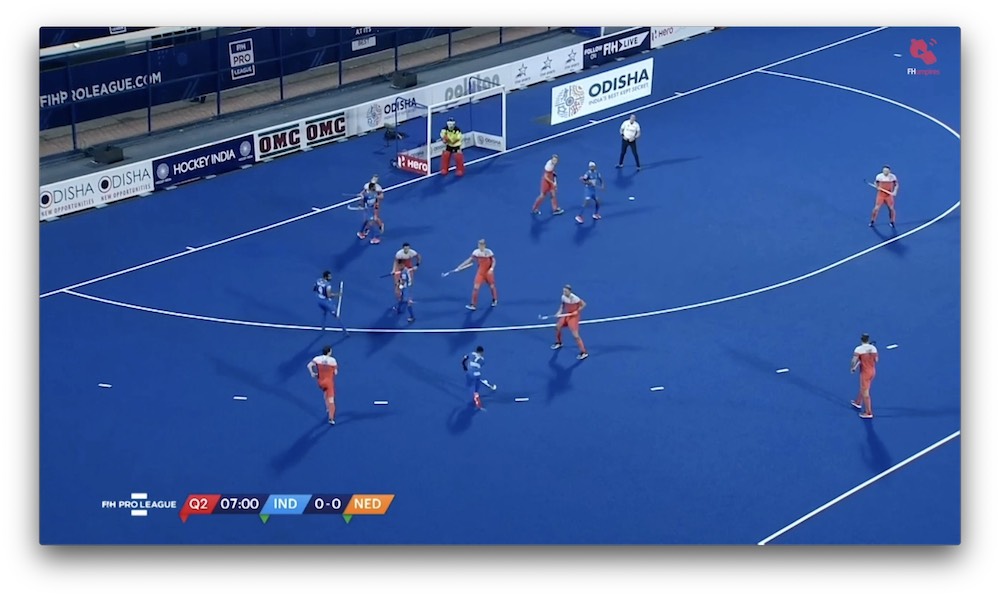
INDvNED Reset for rolling ball at free hit
A good question to ask in this situation is whether, at this level of play, and given that the first warning was clear, should the second instance be met with only a reset, or at this stage in the …
Continue Reading about INDvNED Reset for rolling ball at free hit →
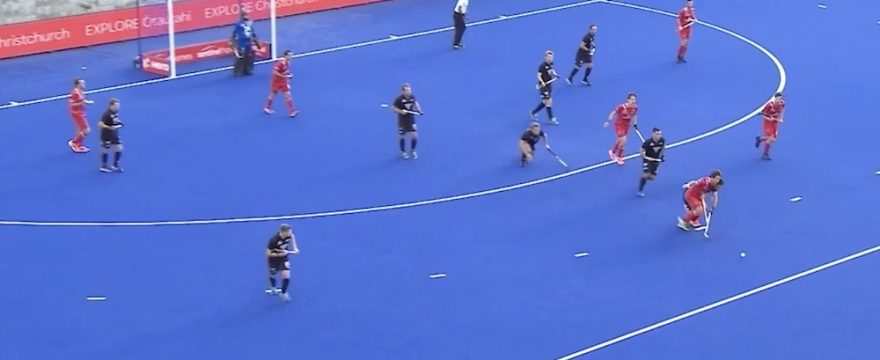
NZLvESP GC for breakdown immediately after turnover
A green card is awarded for a breakdown tackle which is made immediately after the attacker is successfully tackled at the top of the circle, stopping a counter down the centre channel. A team that …
Continue Reading about NZLvESP GC for breakdown immediately after turnover →
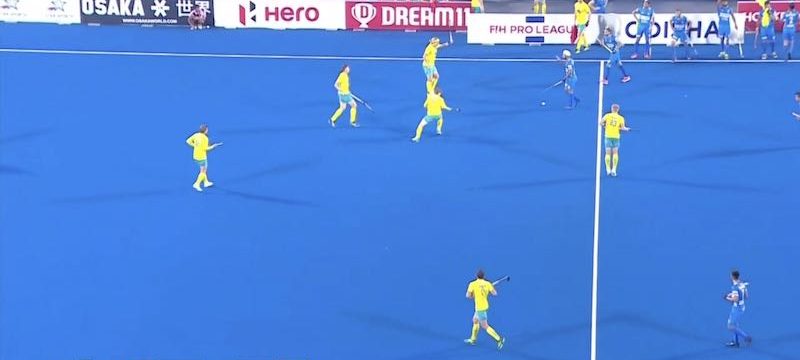
INDvAUS Free hit taken
After a free hit is awarded, the player on the ball cutely moves it slightly but pretends it hasn’t been played. The umpire audibly calls “play on” when an opponent closes and attempts to tackle. …
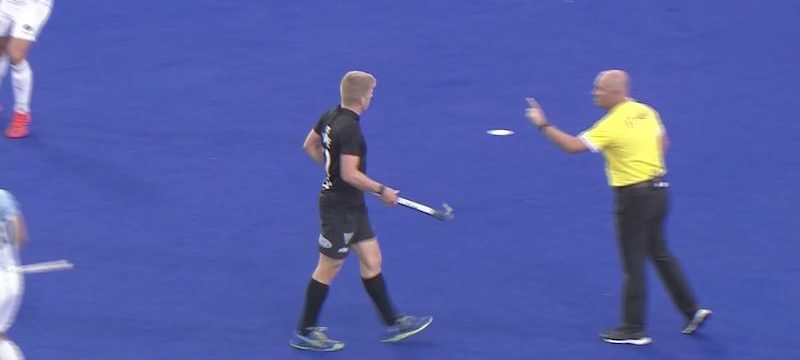
NZLvARG Managing appealing
After awarding an obstruction foul just outside the circle, the attacker visibly (and presumably audibly) berates the umpire. The umpire immediately communicates back to him, sending a clear message …
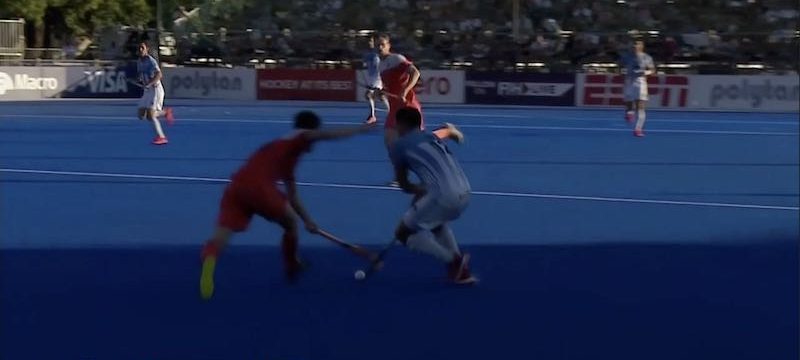
ARGvNED GC breakdown stick obstruction
A long pursuit by a defender leads to two breakdown tackles and one green card. To access this content, you must purchase FHU3T Green, FHU3T Green 365, FHU3T Yellow 365 or FHU3T Yellow. …
Continue Reading about ARGvNED GC breakdown stick obstruction →
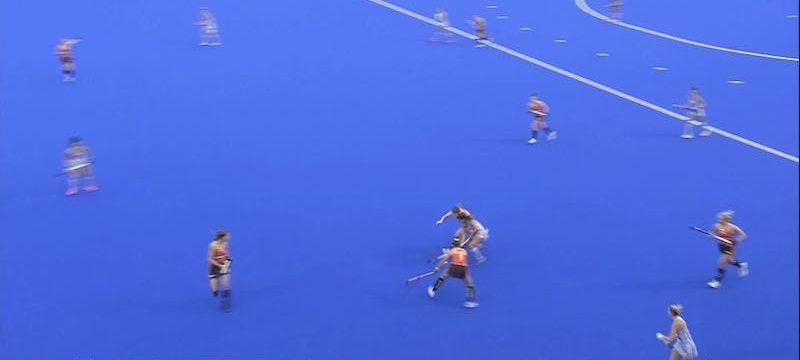
AUSvARG Breakdown stick tackle and ball placement
The second warning whistle of the game comes from this clear and unnecessary breakdown stick obstruction, 5’ after the first warning whistle of the game. On the ensuing free hit, the umpire …
Continue Reading about AUSvARG Breakdown stick tackle and ball placement →

NZLvESP VR for danger and stick injury
A dangerous play emerges when a defender deflects the ball up in the air and the attacker attempts to pick it with their stick, hitting the fouling player in the forehead. The initial danger was still …
Continue Reading about NZLvESP VR for danger and stick injury →
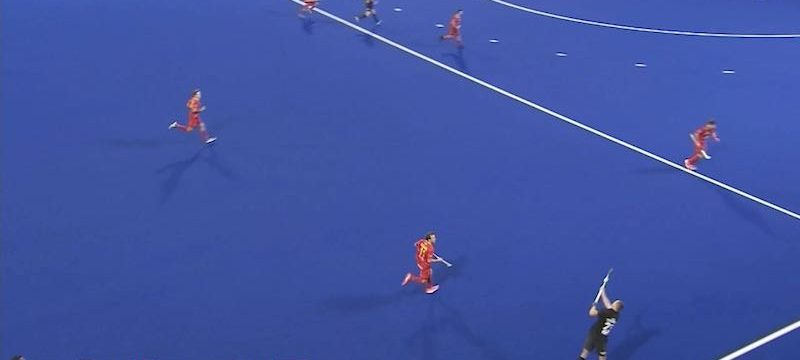
NZLvESP Aerial attacker no control
On the aerial reception, the initial receiver isn’t given 5m to control a difficult aerial coming from overhead. The defender infringes the 5m immediately after the first touch, resulting in a quick …

ESPvNED Flashing in the circle
When the play is in the deep far side of your circle, “flashing” a few metres inside the circle towards the penalty spot is an effective and relatively safe way to get yourself a better view of the …
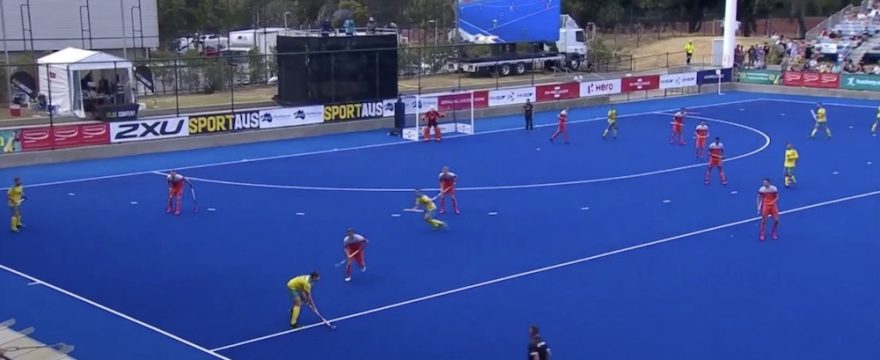
AUSvNED When the ball is played on a free hit
A 23m restart is taken with the smallest of dribbles, and although the taker draws it back to a stationary position before resuming his movement, has clearly initiated his self-pass. It’s important to …
Continue Reading about AUSvNED When the ball is played on a free hit →
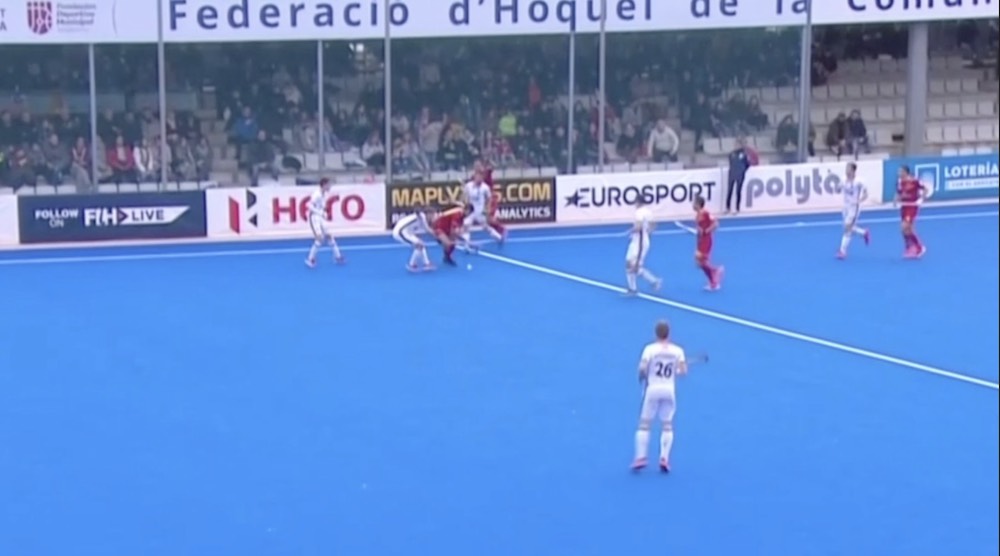
ESPvGER Green card 5m infringement
The tactic of tackling “in numbers” makes it difficult to sort out which defenders are caught within the 5m zone around the spot of the foul when the whistle blows, and which defenders are not and can …
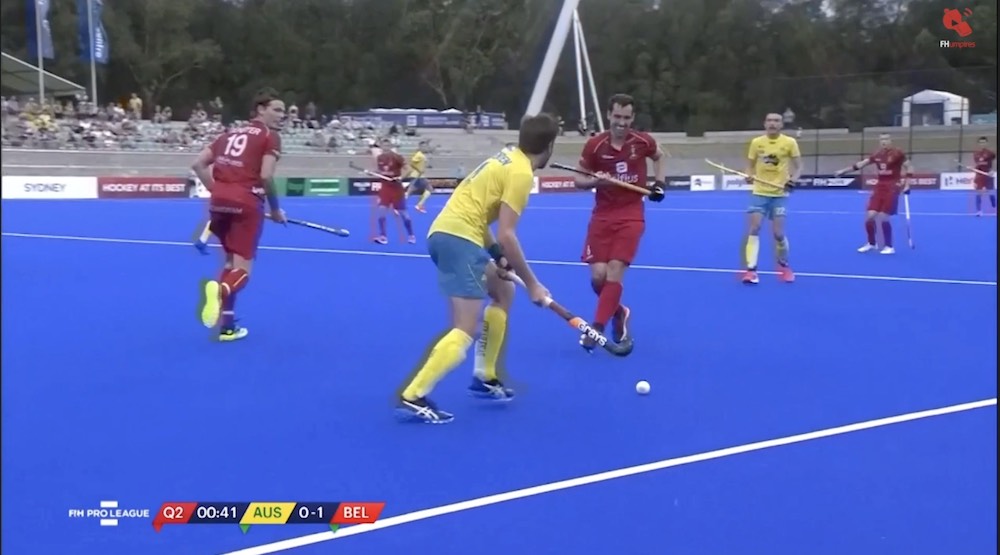
AUSvBEL Clarity on the self-pass
The importance of establishing where the self-pass is taken from is shown in this clip. The foul occurs ~2m behind the 15m line, and from a dead stop, the AUS player puts the ball in motion. He then …
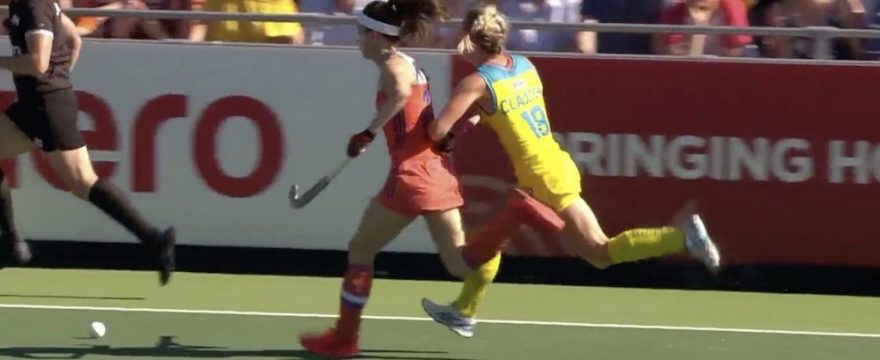
NEDvAUS GC advantage and communication
A green card is given after a short advantage is played through a transfer across to the other side of the pitch. The chasing defender beats the attacker to the ball and receives a little shove in the …
Continue Reading about NEDvAUS GC advantage and communication →
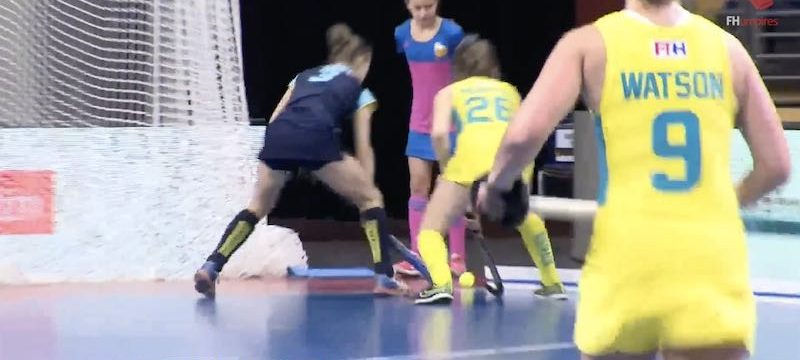
UKRvAUS PC intentionally off back-line
The defender is very subtle here but despite using the side-board and low pace, does manage to intentionally send the ball off the back-line and a penalty corner is awarded. To access this …
Continue Reading about UKRvAUS PC intentionally off back-line →
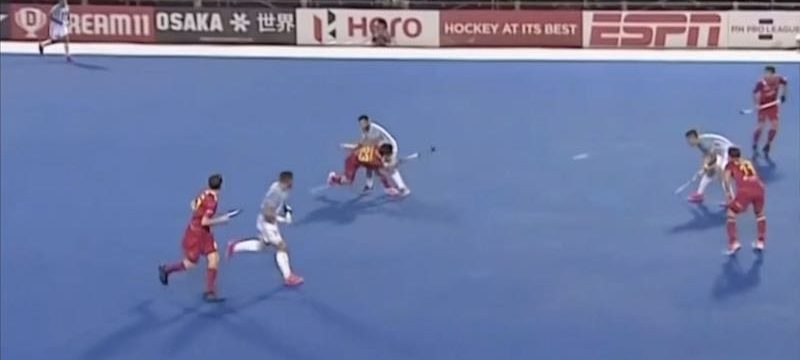
ARGvESP YC for physical play after advantage
After a ball is turned over in the midfield on an aerial interception, the receiver feeds a terrific through ball into space and gets clattered from behind by a dangerous and physical tackle. …
Continue Reading about ARGvESP YC for physical play after advantage →
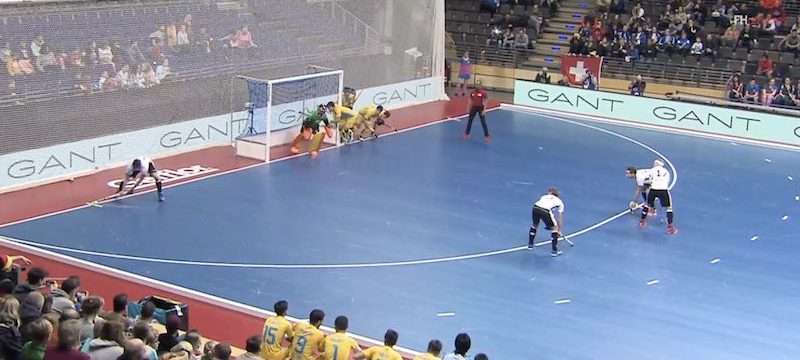
GERvKAZ Early break on the PC
The umpire detects an early break by at least one defender on this penalty corner. Notice that the signal he uses is the same as a free push and leads to some initial, albeit good-natured, confusion …
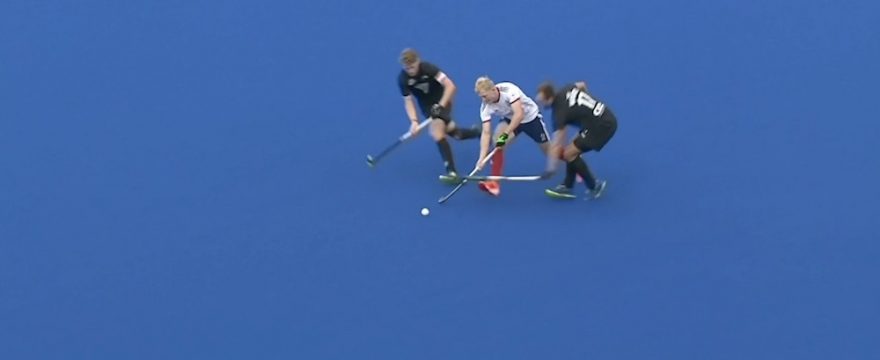
NZLvGBR Stick obstruction
The defender attempts a tackle from behind the ball carrier. He misses the ball and strikes the attacker’s stick, but the attacker is able to retain possession of the ball and has an opportunity to …