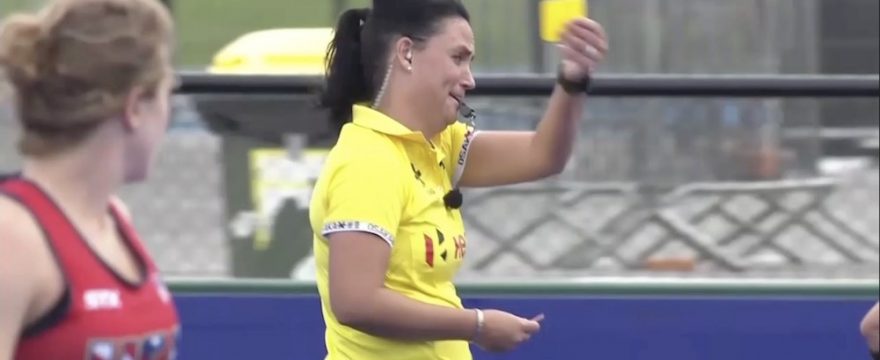
After a turnover in the circle, the same player who had previously received a green card in Q2 breaks the play down with a stick obstruction. We have also seen a yellow card awarded to this team late …
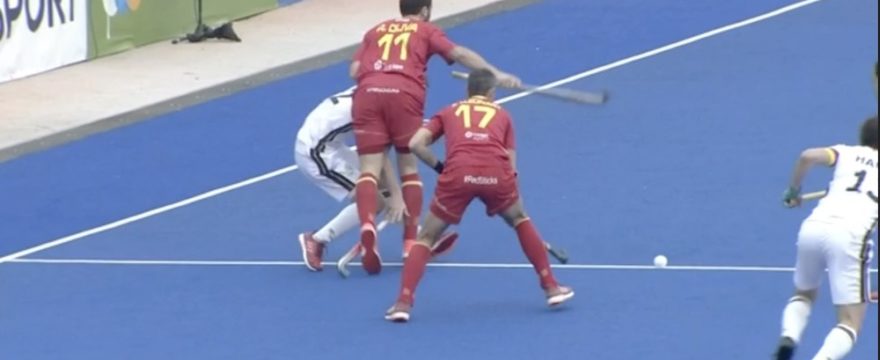
ESPvGER Reckless physical tackle early
Seconds into this game, a ESP player attempts to dispossess the GER ball carrier and rather recklessly makes body contact (as per the wording of the rule), bowling his opponent over. The GER player is …
Continue Reading about ESPvGER Reckless physical tackle early →
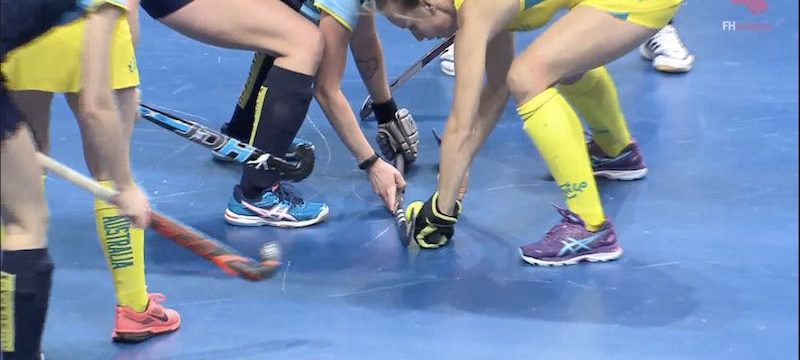
UKRvAUS Trap for bully
The ball carrier dribbles into trouble and ends up in a stalemate with one opposing defender. When the ball doesn’t move, the umpire calls a bully for the no-fault obstruction and it takes two tries …
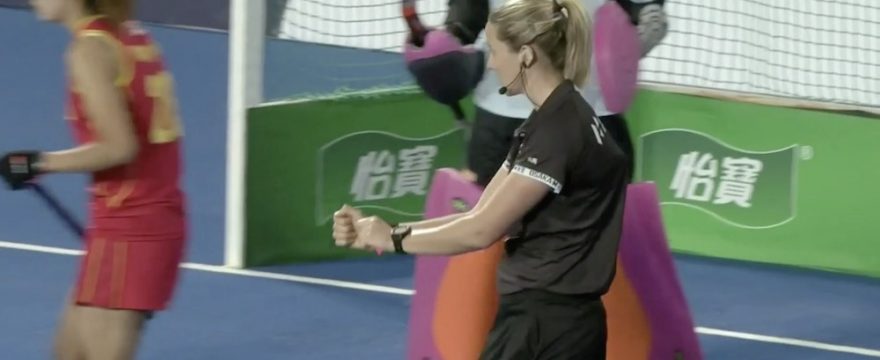
CHNvBEL Management of players pushing in circle
As the ball is being situated for a 23m restart, the players begin jostling for position in the circle. The umpire uses her whistle to get the players’ attention and prevents the ball from being put …
Continue Reading about CHNvBEL Management of players pushing in circle →
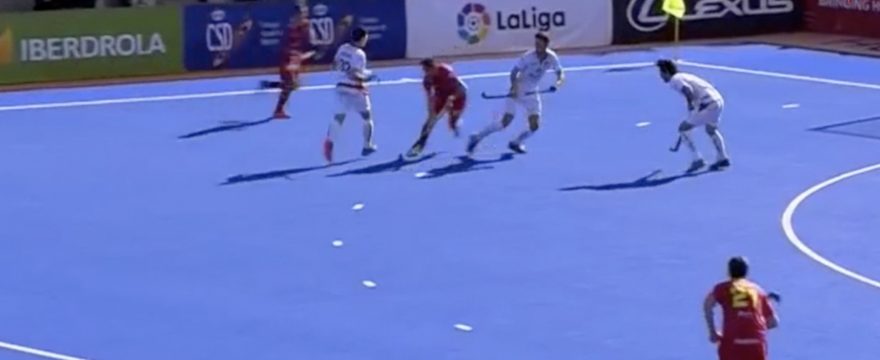
ESPvBEL 5m from free hit around circle
Although the defender was arguably within 5m of the quick self-pass as it was taken, he takes a jog of a step backwards to complete the 5m distance and then engages with the attacker. A good play on …
Continue Reading about ESPvBEL 5m from free hit around circle →
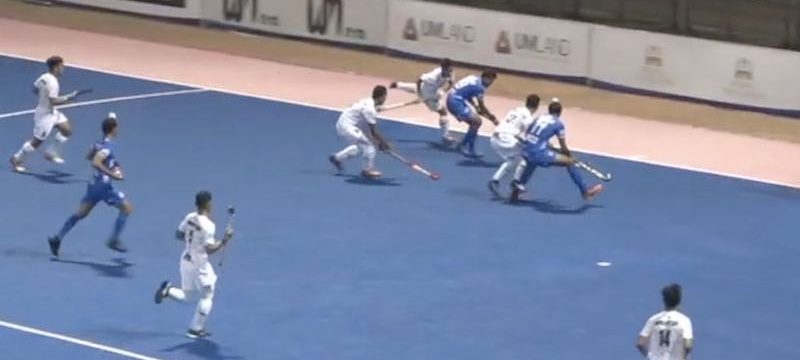
MASvIND Penalty stroke and yellow card given to defender for diving in front of the ball was tripped
On this play, a penalty stroke is awarded against the defender for intentionally throwing his body in front of the ball inside the circle. However, on replay it’s clear that he tripped over the leg of …

ARGvUSA Third party obstruction on PC
The difficulty in detecting third-party obstruction on the penalty corner attack is that you’re concerned with whether the ball has left the circle and defenders being struck with the initial shot, …
Continue Reading about ARGvUSA Third party obstruction on PC →
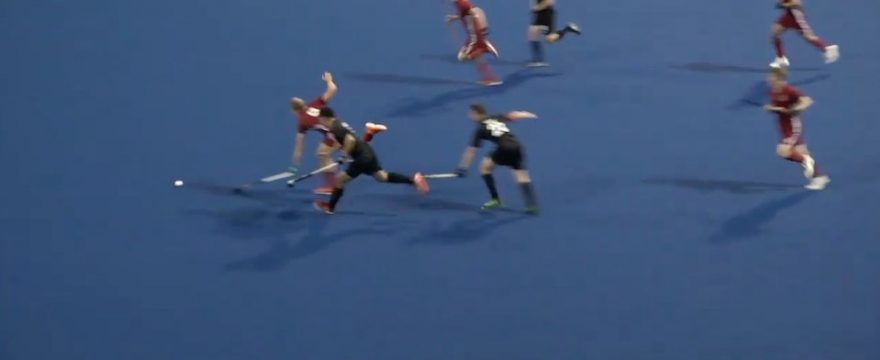
GBRvNZL Yellow card for breakdown
A yellow card for the 3rd breakdown by the same team in the match, now in Q3. Note the space available to the attacker behind the two defenders he’s beaten that he would have been able to burst …
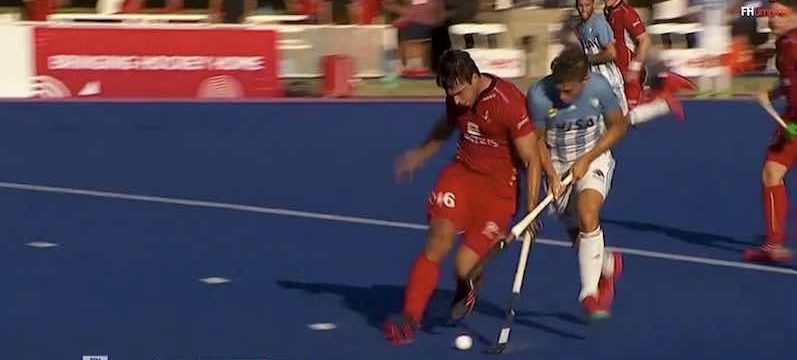
ARGvBEL GC for body obstruction breakdown
As of the beginning of 2020, the FIH Rules Committee has confirmed that this interpretation can no longer be implemented, and if a personal penalty is given within the 23m area, it must be accompanied …
Continue Reading about ARGvBEL GC for body obstruction breakdown →
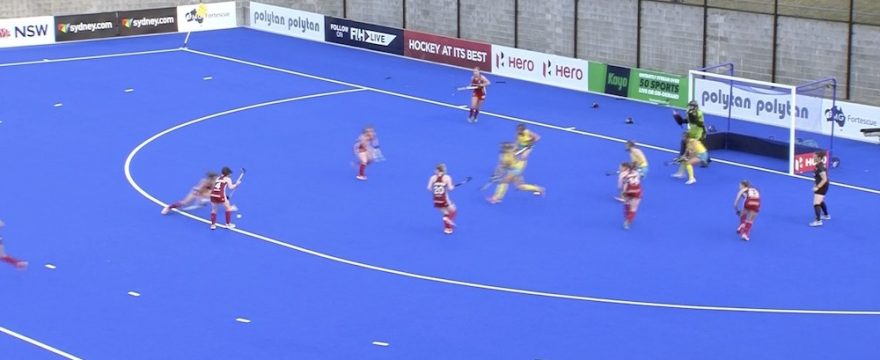
AUSvGBR First shot sweep hit too high on PC
On this penalty corner, the sweep hit crosses the goal line at a height over the top of the backboard. Because the sweep hit involves a backswing, it meets the definition of a hit under the rules and …
Continue Reading about AUSvGBR First shot sweep hit too high on PC →
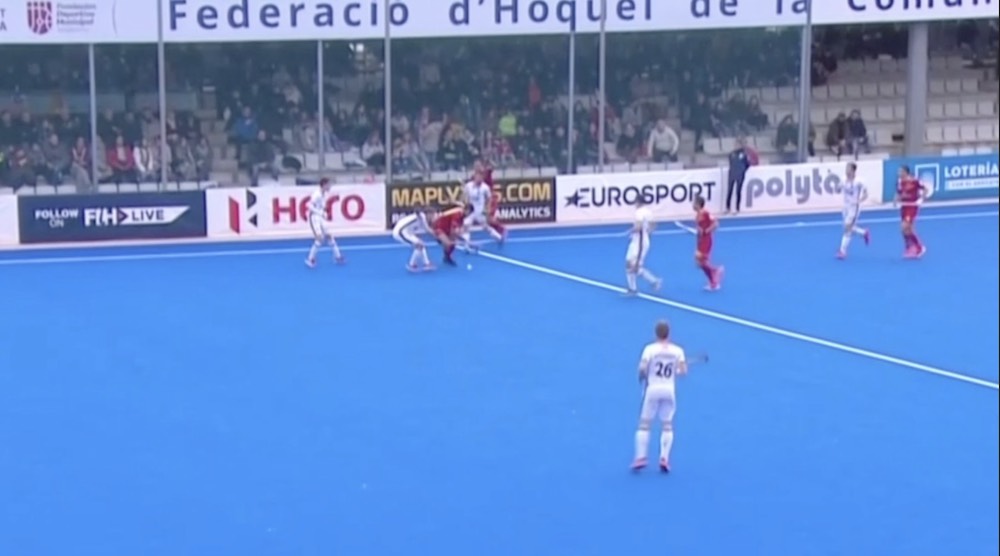
ESPvGER Green card 5m infringement
The tactic of tackling “in numbers” makes it difficult to sort out which defenders are caught within the 5m zone around the spot of the foul when the whistle blows, and which defenders are not and can …
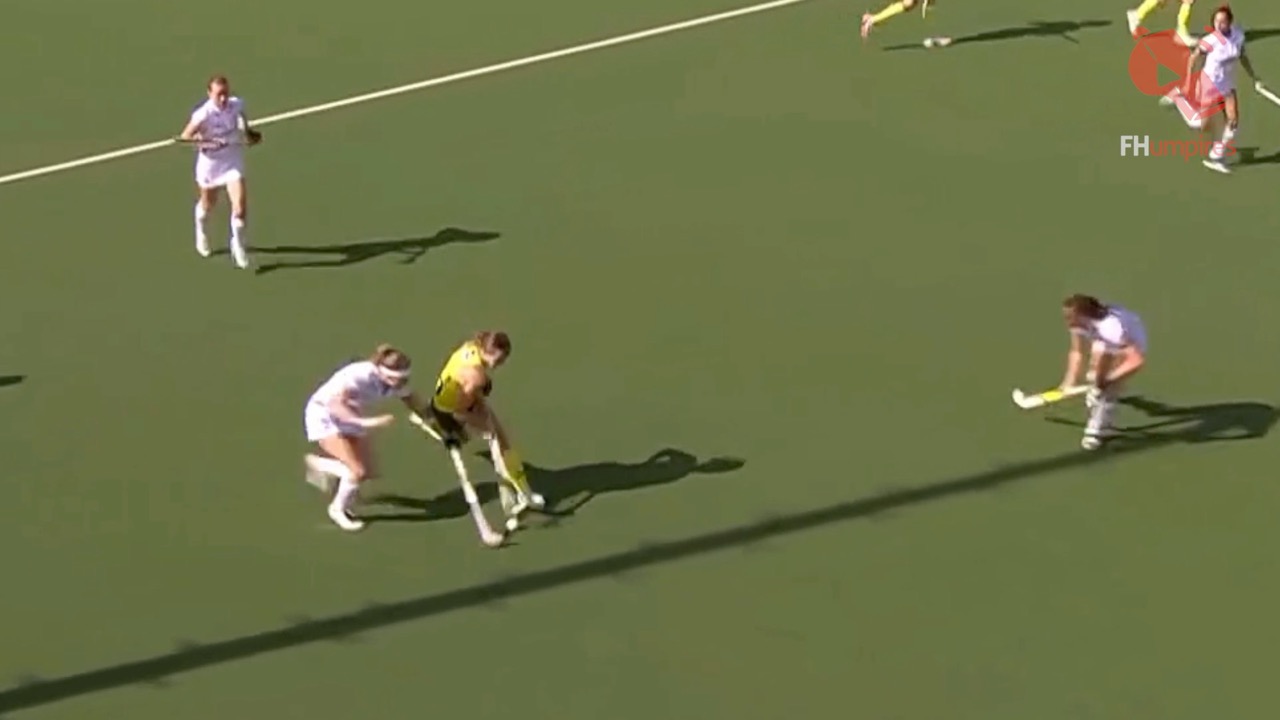
BELvAUS GC breakdown tackle
This is a classic turnover situation. A retreating defender chases the ball carrier from behind, gets close, but can’t make a tackle from there. Instead, the defender attemps to block space away …
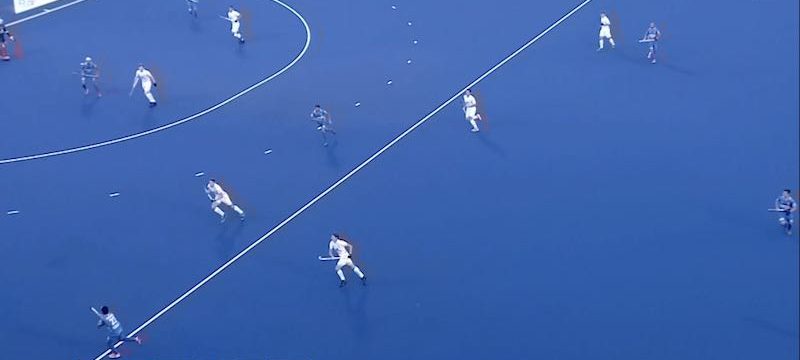
INDvBEL Aerial lost control
This aerial skips past the first potential interceptor and is mishandled by the attacking receiver, who plays it towards a second defender who is well more than 5m away at the reception. This defender …

NZLvGBR No third party obstruction
This is a good example of when an obstruction isn’t a foul. The ball carrier pushed the ball away from him past the nearest defender, and then lifted his stick over his head without making a real …
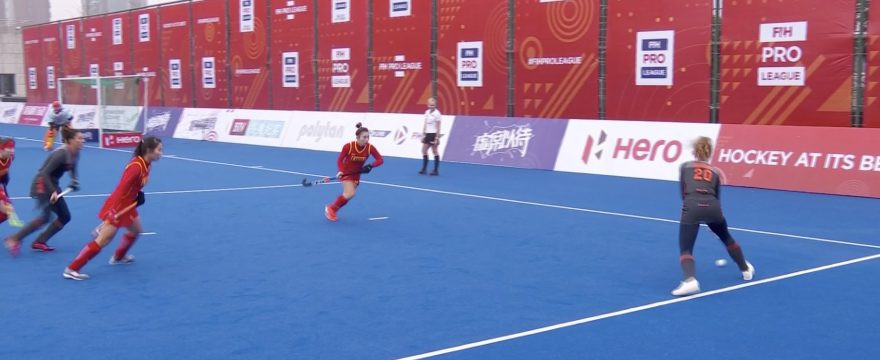
CHNvNED Side line ball not moved 5m
An attacker is awarded a side line ball. Taking it on the roll, she doesn’t quite move it 5m before sending the cross into the circle, and the free hit is given. To access this content, …
Continue Reading about CHNvNED Side line ball not moved 5m →
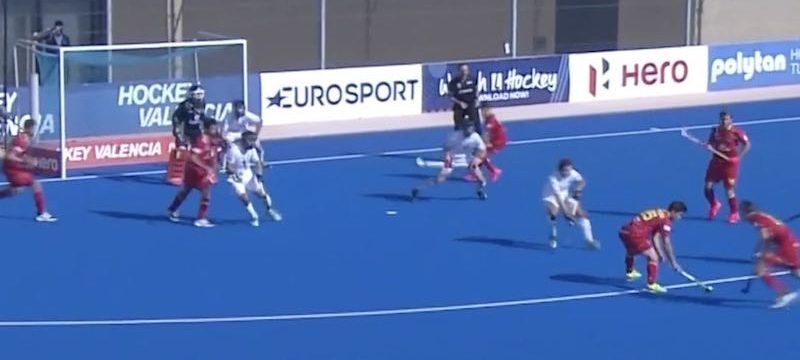
ESPvBEL No goal PC first shot hit high
On this penalty corner, the insertion isn't cleanly trapped and needs to be brought outside the circle by the flicker. He then drags the ball inside the circle and releases it towards the goal, but …
Continue Reading about ESPvBEL No goal PC first shot hit high →
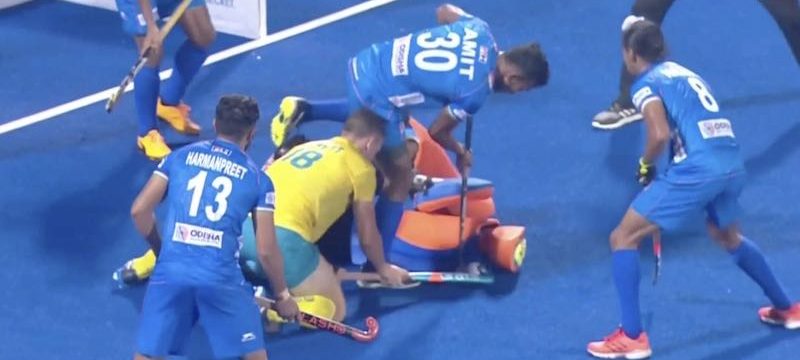
INDvAUS Danger into GK
A melee in front of the goalkeeper goes on for several seconds, where one attacker, two field defenders and the goalkeeper jockey for the ball. Eventually, the attacker gets his stick on the ball but …
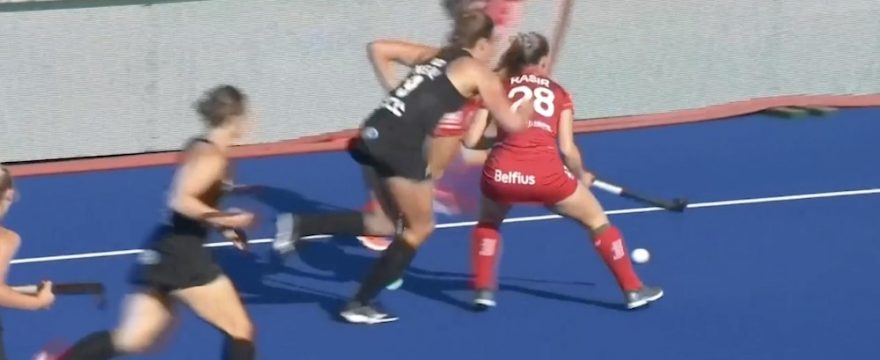
NZLvBEL Third-party obstruction
An unusual third-party obstruction goes unspotted in the deep far corner of the attacking 23m. The defender was within playing distance and attempting to get to the ball when #28 passed off the ball …
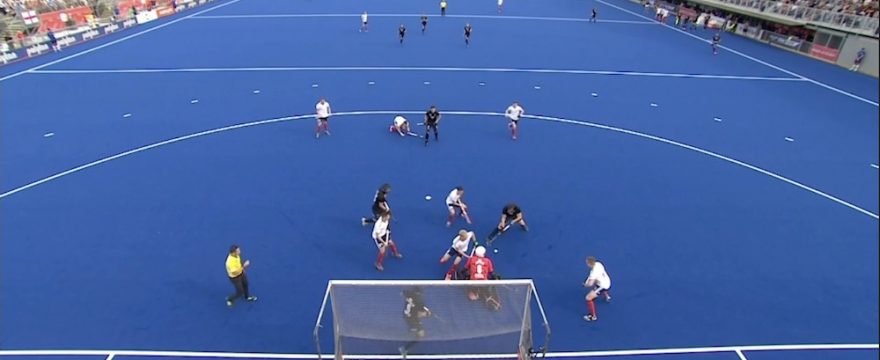
NZLvGBR Follow through danger to GK
A penalty corner shot rebounds to an attacker is close proximity to the goalkeeper. The shot is driven straight at the goalkeeper and the follow-through appears to have caught him in the pads. The …
Continue Reading about NZLvGBR Follow through danger to GK →
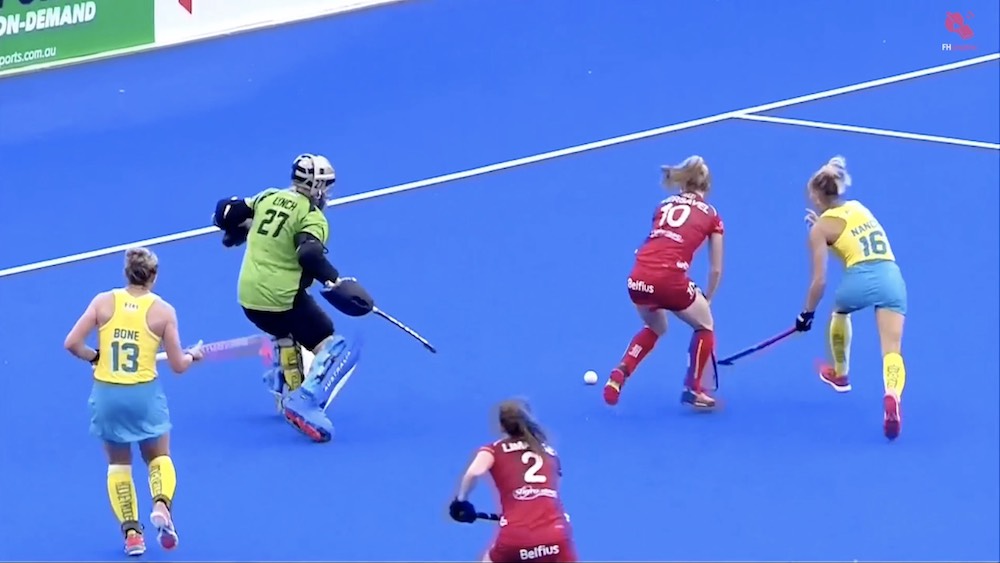
AUSvBEL Penalty stroke
A penalty stroke is given for this tackle. What factors do you see present to support this decision, and what factors would be contrary? To access this content, you must purchase FHU3T …
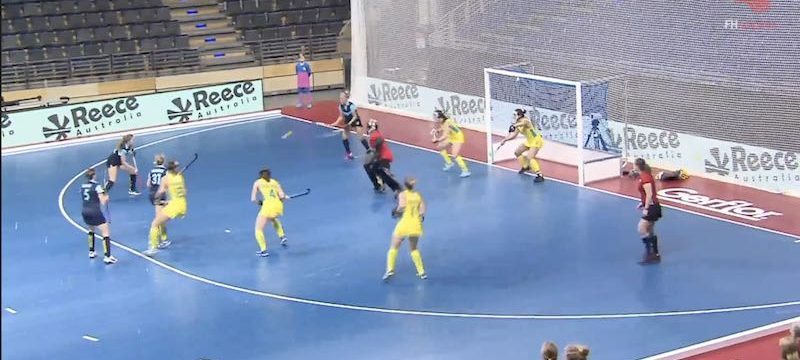
UKRvAUS Deflected shot raised but no disadvantage
This passage of play shows how raised balls are handled inside the circle. The first is a save made by a defender where she stops the ball legally in mid-air, deflecting it back towards an attacker, …
Continue Reading about UKRvAUS Deflected shot raised but no disadvantage →
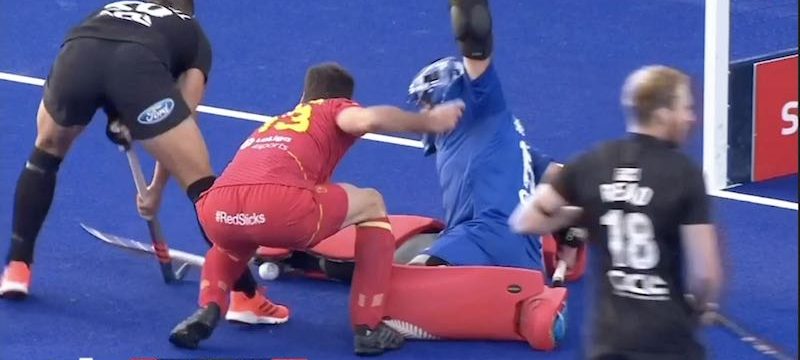
NZLvESP Obstructions around GK
The ball is stopped by the goalkeeper splayed on the ground and rests against his kicker. The attacker makes no effort to bring the ball away and traps the ball there, other hand raised to demand the …
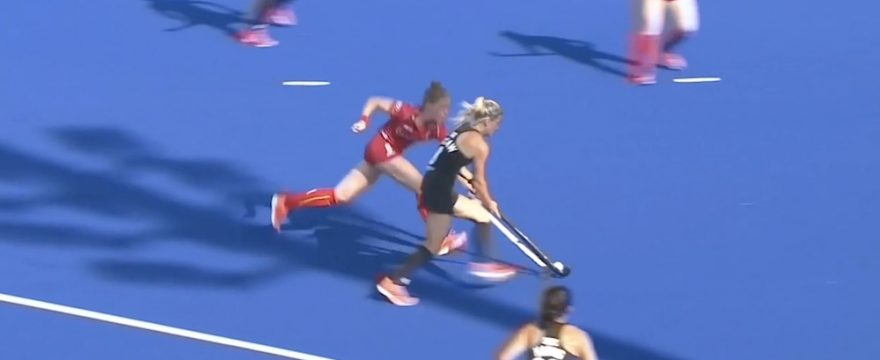
NZLvBEL PC upgrades
Upgrades are given during these sequences of play. What are you looking for in these situations, and when would you upgrade or not? Is the defender tackling from behind the ball? Does the defender …
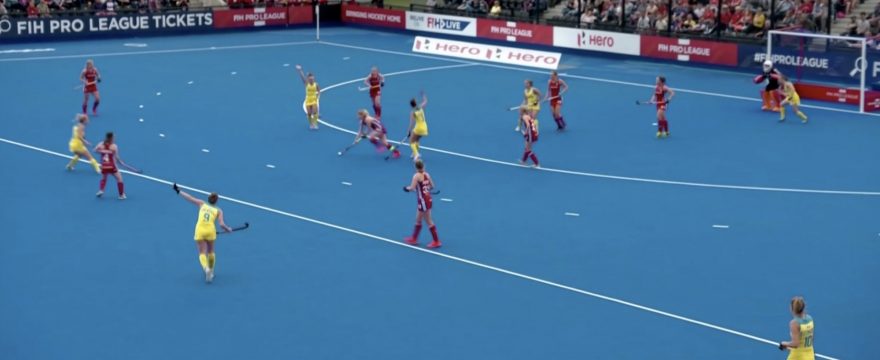
GBRvAUS Cooperation from supporting umpire
One difficult area for the controlling umpire is the top of the circle, when the ball is received by a player facing in the opposite direction. Their body will often block the view of the ball, making …
Continue Reading about GBRvAUS Cooperation from supporting umpire →

BELvIRL Raising a ball with a hit out of the air
As we are seeing more frequently, players have the skill to hit the ball out of the air, raise it, and do so safely. However, there are real questions about whether we should be allowing it. In …
Continue Reading about BELvIRL Raising a ball with a hit out of the air →
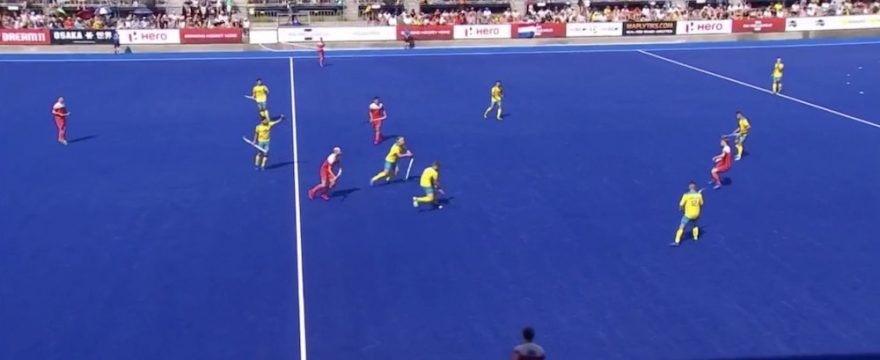
AUSvNED GCx2 playing ball after whistle
Two instances within 45s of the same team playing the ball after the whistle and breaking down play. In both examples, the fouling player subtly moves the ball further away from the spot of the foul …
Continue Reading about AUSvNED GCx2 playing ball after whistle →
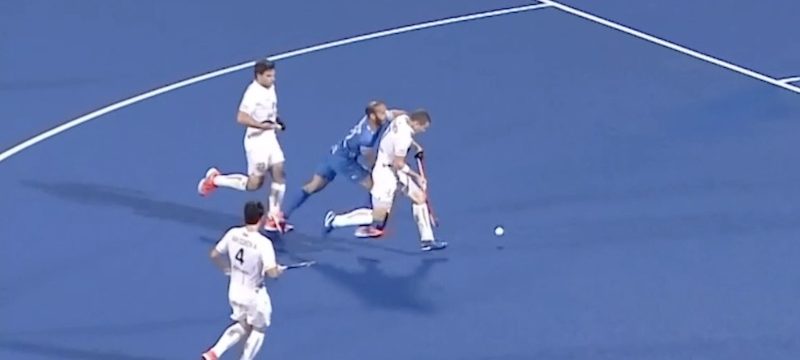
INDvBEL Obstruction on chasing tackle
In his attempt to chase down the ball, the attacker slightly trips up and pushes his opponent as they compete for position. Note the stick position which isn’t being used in an attempt to reach the …
Continue Reading about INDvBEL Obstruction on chasing tackle →
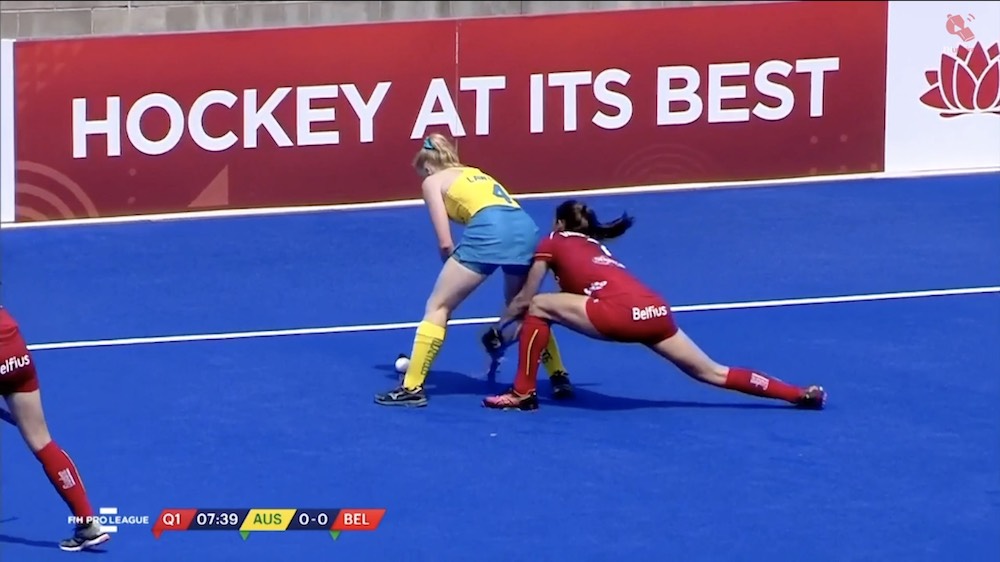
AUSvBEL Tackling a turned player
The ball carrier turns her back to the defender while keeping the ball mostly moving. Twice, the defender attempts to tackle, the first around the attacker’s legs and the second between them. On the …
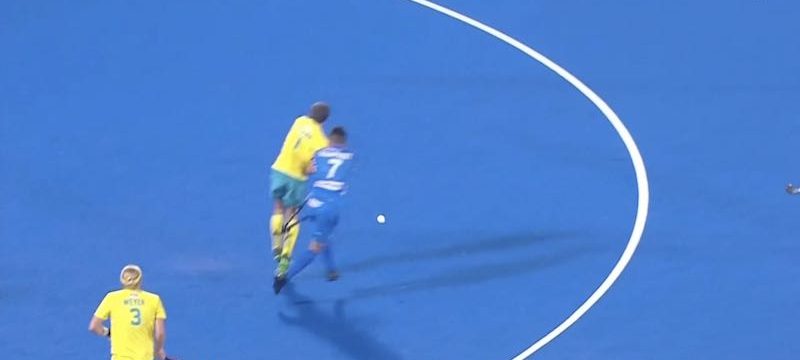
INDvAUS 2 GCs breakdown and danger
The first two green cards of the game come in quick succession after first, a chasing defender pushes the ball carrier from behind just outside the 23m. The perfectly-timed and well-weighted nudge is …
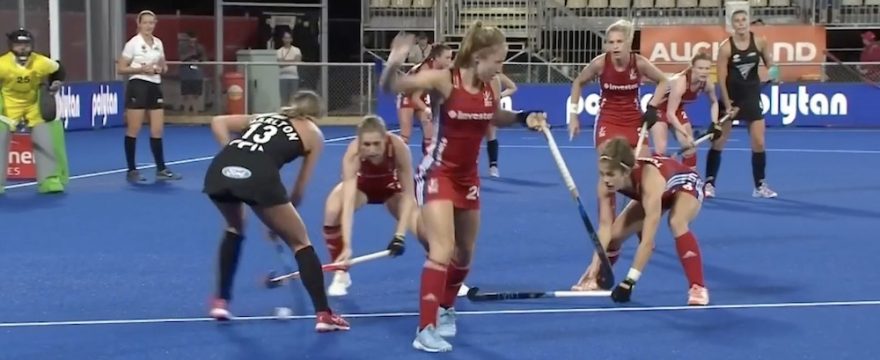
NZLvGBR Ball played into circle before 5m
After a couple of free hits are awarded around the circle, the attacker fails to move the ball 5m before carrying the ball into the circle. To access this content, you must purchase FHU3T …
Continue Reading about NZLvGBR Ball played into circle before 5m →
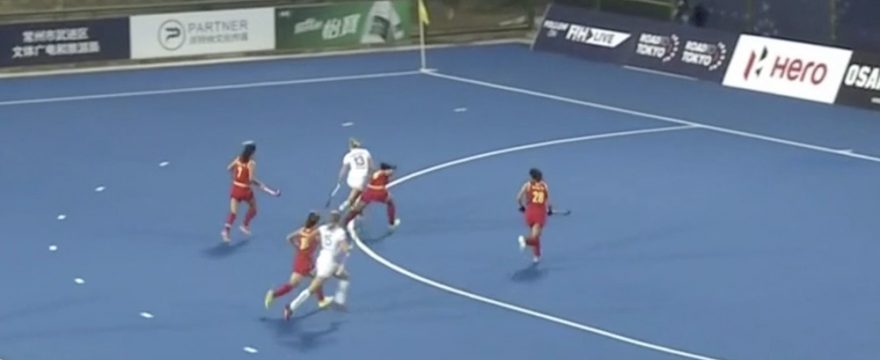
CHNvBEL Body shield on left circle top
An attacker carries the ball towards the top left (far) side of the circle as a defender approaches from the front. The attacker drops the ball behind her body just as the defender attempts to make …
Continue Reading about CHNvBEL Body shield on left circle top →
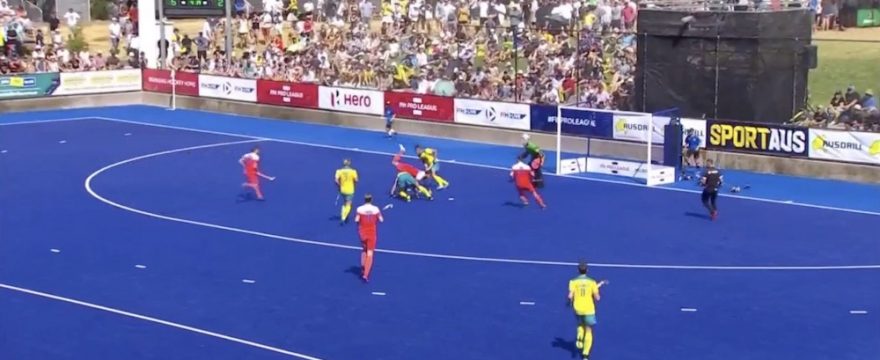
AUSvNED Low tackle attacker over top
This tackle shows the fine line between a well-executed block and tackling illegally with body contact. The defender is tracking body-to-body and is able to get his stick completely flat and cleanly …
Continue Reading about AUSvNED Low tackle attacker over top →
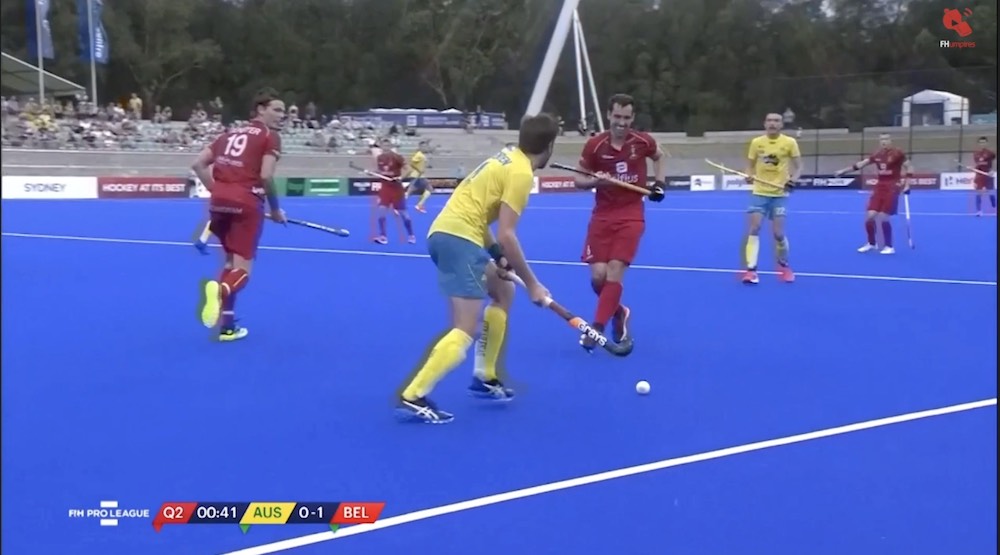
AUSvBEL Clarity on the self-pass
The importance of establishing where the self-pass is taken from is shown in this clip. The foul occurs ~2m behind the 15m line, and from a dead stop, the AUS player puts the ball in motion. He then …
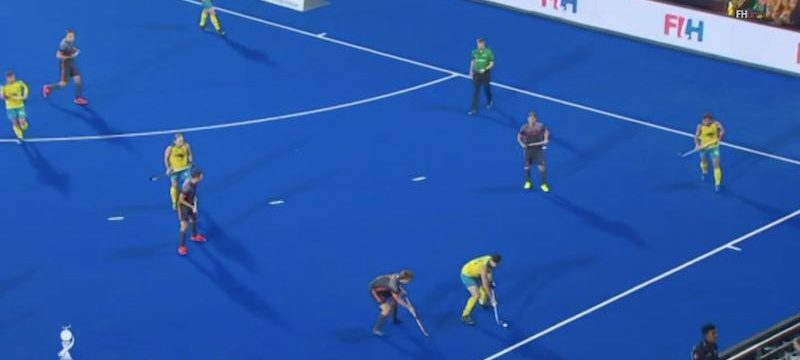
AUSvNED Interior positioning for sideline play
Notice the umpire’s positioning and movement as the ball moves around his deep and near sideline area. Instead of moving too quickly outside the play from the preferred interior position, he moves …
Continue Reading about AUSvNED Interior positioning for sideline play →
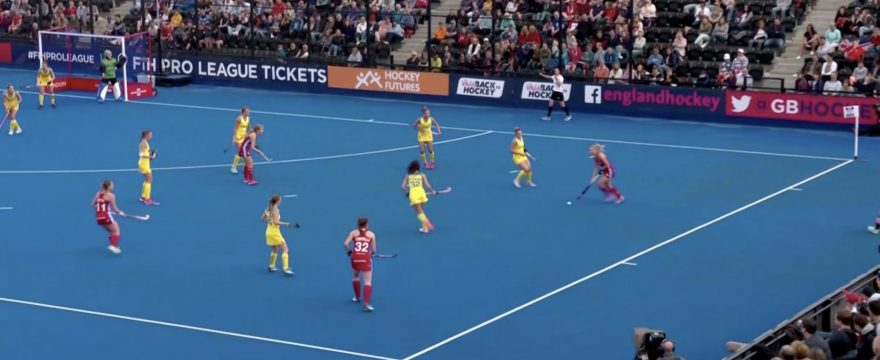
GBRvAUS Rolling ball on free hit reversed
The attacker is awarded a free hit a few metres inside the sideline, also inside the 23m area. She retrieves the ball which is rolling towards the sideline, and continues the roll without any change …
Continue Reading about GBRvAUS Rolling ball on free hit reversed →
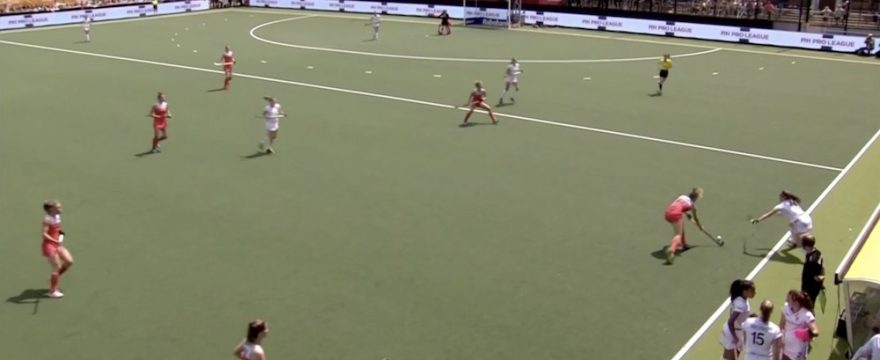
NEDvBEL YC 3rd breakdown
This is the third breakdown foul by this team so far in the game, and the two previous had been met with green cards. However, the reason this seemingly innocuous stick tackle is penalized this …

CHNvBEL Aerial one backs off another infringes
An aerial goes into two opposing players. One attacking player (BEL) backs off to grant the defender 5m to bring down the ball, but one of their teammates from behind the receiving space rushes into …
Continue Reading about CHNvBEL Aerial one backs off another infringes →
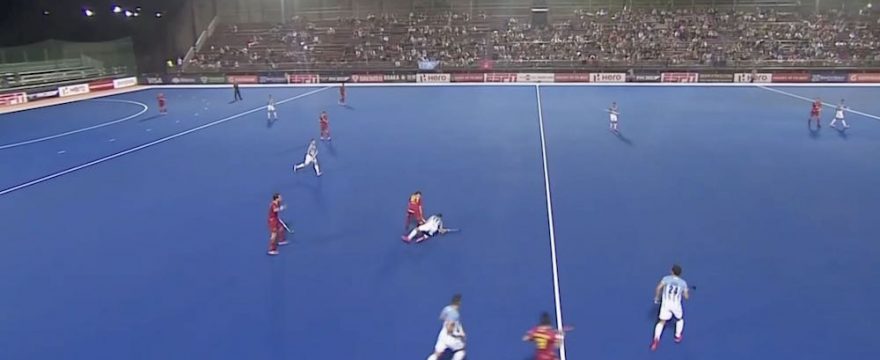
ARGvESP GC breakdown stick tackle
A breakdown tackle is rewarded with a green card just as the tempers start to rise in this game. It’s difficult to see exactly what occurred due to the players’ body positions and the distant camera …

UKRvAUS Trapped ball on board for FP
When the ball carrier gets caught without many options on the right side-board, she eventually pushes the ball into the defending player's stick and causes the trapped ball obstruction, resulting in a …
Continue Reading about UKRvAUS Trapped ball on board for FP →
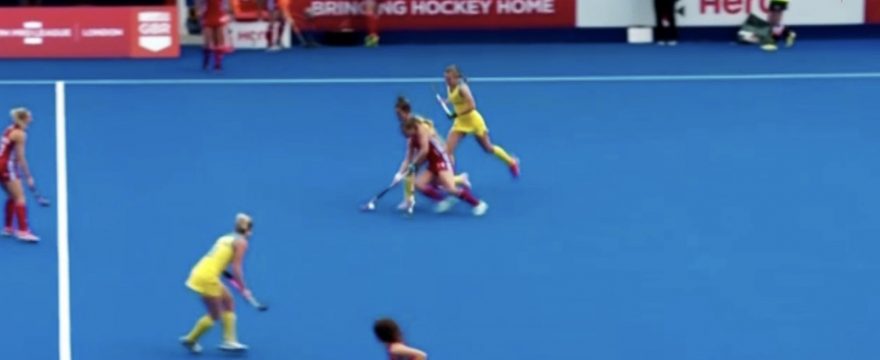
GBRvAUS GC breakdown stick tackle
A green card, the first of the game, is awarded for this tackle attempted from a risky position which breaks down the play. To access this content, you must purchase FHU3T Green, FHU3T …
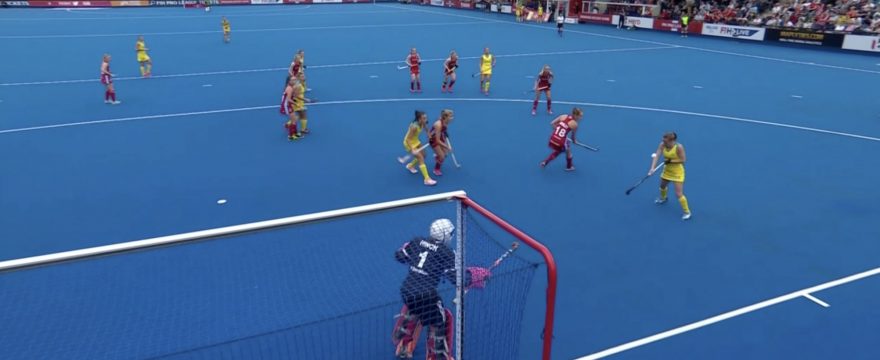
GBRvAUS VR danger can’t play advantage
A ball sent into the circle deflects high off a defender’s stick, striking the next attacker in the arm, where the umpire is unsighted. Rather than attempting to play on from a poor angle, the …
Continue Reading about GBRvAUS VR danger can’t play advantage →
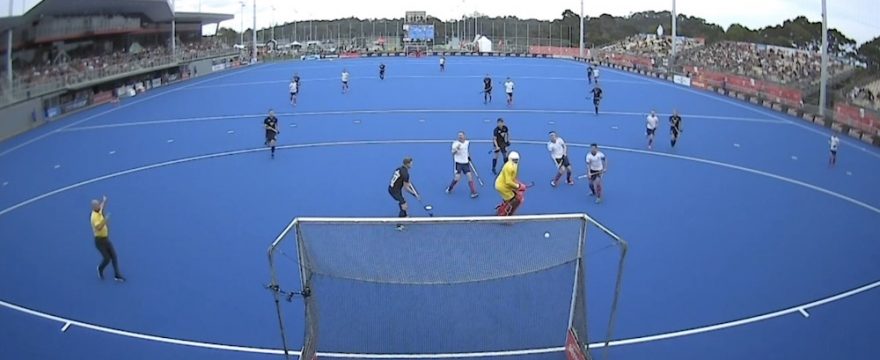
NZLvGBR Back stick no goal
A back stick shot is correctly called in the first instance by the umpire. The slowly looping trajectory of the ball contrasts with the pace of the stick swing, a good indicator that energy has been …
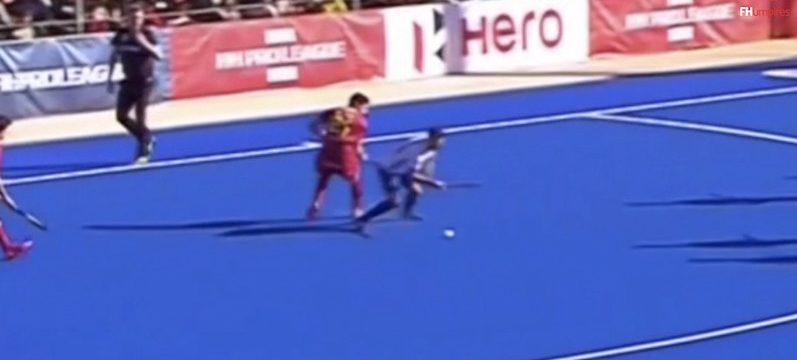
ESPvGBR Patient whistle on smaller fouls inside the circle
Showing patience inside the circle when little incidents occur can show dividends when an umpire has a thorough understanding of the skill level of the players involved. There is a minor bump by the …
Continue Reading about ESPvGBR Patient whistle on smaller fouls inside the circle →
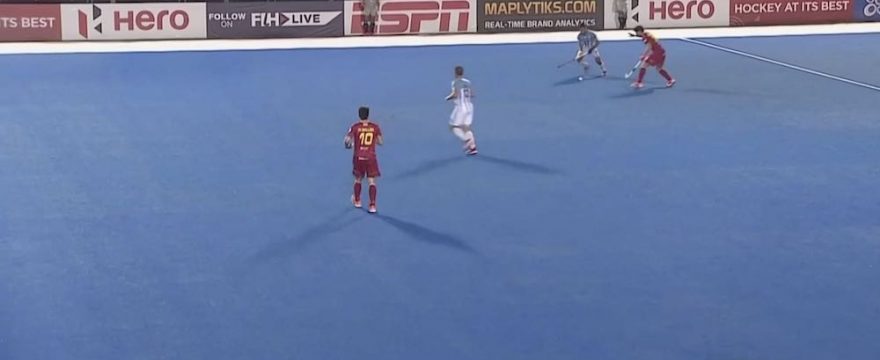
ARGvESP YC playing ball after whistle 2nd card
Knocking the ball away after the whistle leads to a certain yellow card at this stage of the match (and after a few cards had already been given). In addition, this same player had committed a …
Continue Reading about ARGvESP YC playing ball after whistle 2nd card →
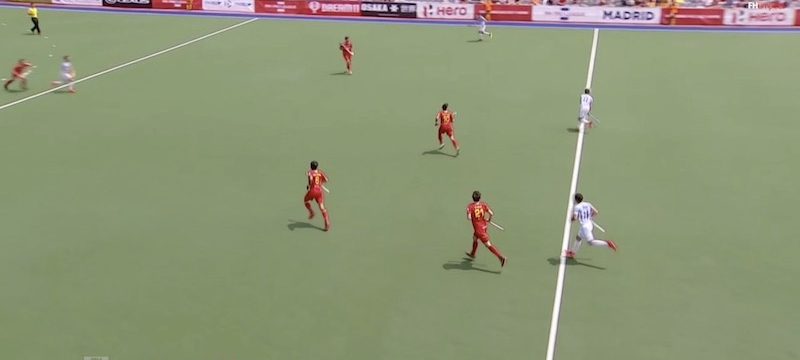
ESPvARG Early read on the transition
The umpire on the far side recognises early the potential for an end to end counter and, being aware of the attacker high in the circle, moves quickly to get to his “happy place” behind the base line …
Continue Reading about ESPvARG Early read on the transition →

NZLvBEL Management of tempers
There are a couple of little nigglies shown by the players here. The controlling umpire double-tweets to get a pause in the play in order to talk to the players, keeping her voice calm. The supporting …
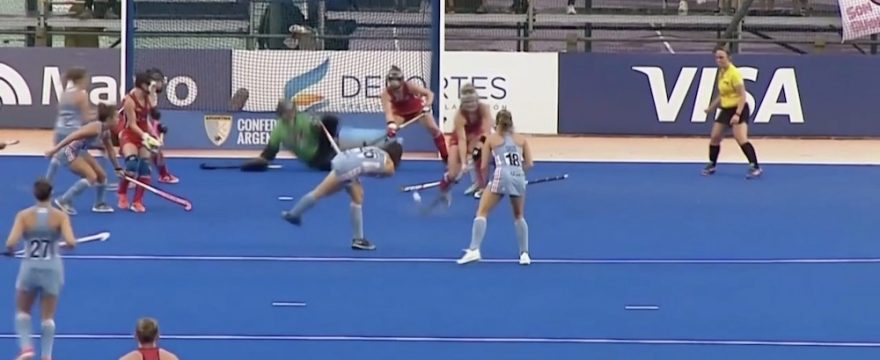
ARGvUSA Deflection of first shot as a hit on PC
The ball is struck with a hit from the top of the circle flat on the ground. A deflection, whether it came from the defender or attacker’s stick, raises the ball over the height of the backboard as …
Continue Reading about ARGvUSA Deflection of first shot as a hit on PC →
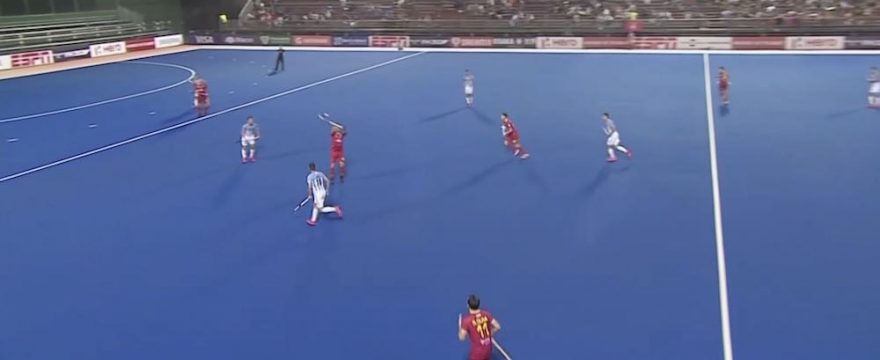
ARGvESP Late whistle on 5m aerial
This aerial is mistrapped but the opposition wasn’t 5 metres. Advantage didn’t accrue so the whistle was blown a little on the later side by the trailing umpire. Knowing your responsibilities is …
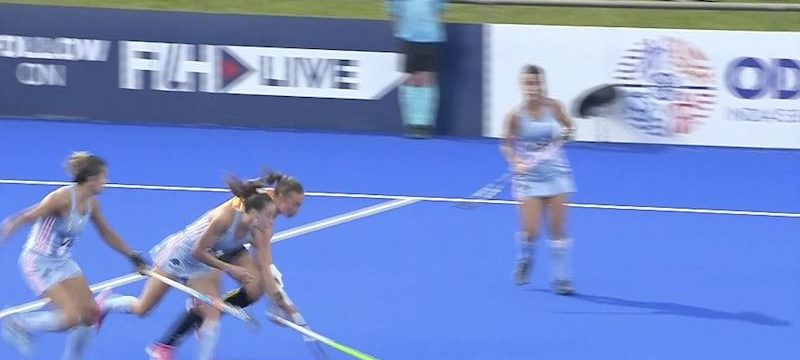
AUSvARG GC breakdown quickly given
The defender takes an extra bite on this tackle as a clear attempt to slow down the attacker by making little attempt at the ball and just throwing her stick in the way. A green card is (quickly) …
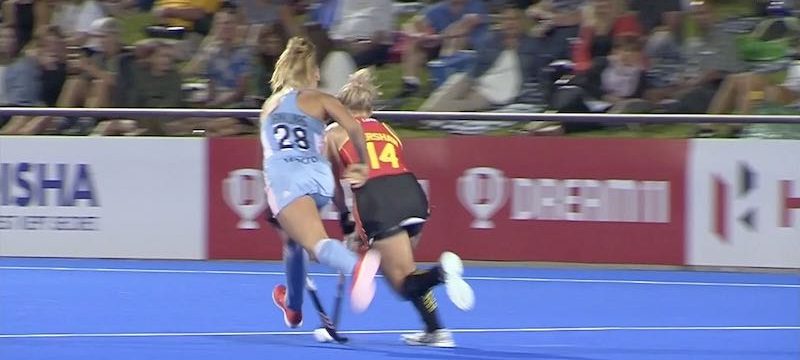
AUSvARG Missed YC for breakdown from behind
What would have been the second yellow card of the game to ARG is missed on this breaking tackle involving a push on the back that takes the ball carrier to ground. These can be difficult to spot if …
Continue Reading about AUSvARG Missed YC for breakdown from behind →